
The short answer: whatever the dress needed on its own, minus anything the bolero will expose. A strapless bodice with built-in structure needs nothing at all until the bolero's sleeve line crosses right where a bra strap would sit, which is exactly the spot a strap cannot hide. The Bridal Kit covers the strapless problem and the layered one at the same time, with nothing at the shoulder for the priest, the photographer, or the sleeve to catch. Everything below is the longer answer: what dioceses actually require, and how the bolero changes the calculation underneath it.
The dress arrives in January. The ceremony is in June at a Catholic parish that the bride's grandmother has attended for forty years. The priest's requirements are clear: shoulders covered, neckline modest, no strapless silhouettes without a layer on top. The dress, which was chosen before the venue was confirmed, has no sleeves and a V-neckline that begins precisely where modest ends.
This is not an unusual situation. The collision between a contemporary dress and a church with defined requirements produces a specific problem that requires a specific answer. The bolero is usually that answer. What the bolero does to everything underneath the dress is a second problem that most brides address in the final week before the ceremony.
What the Church Actually Requires
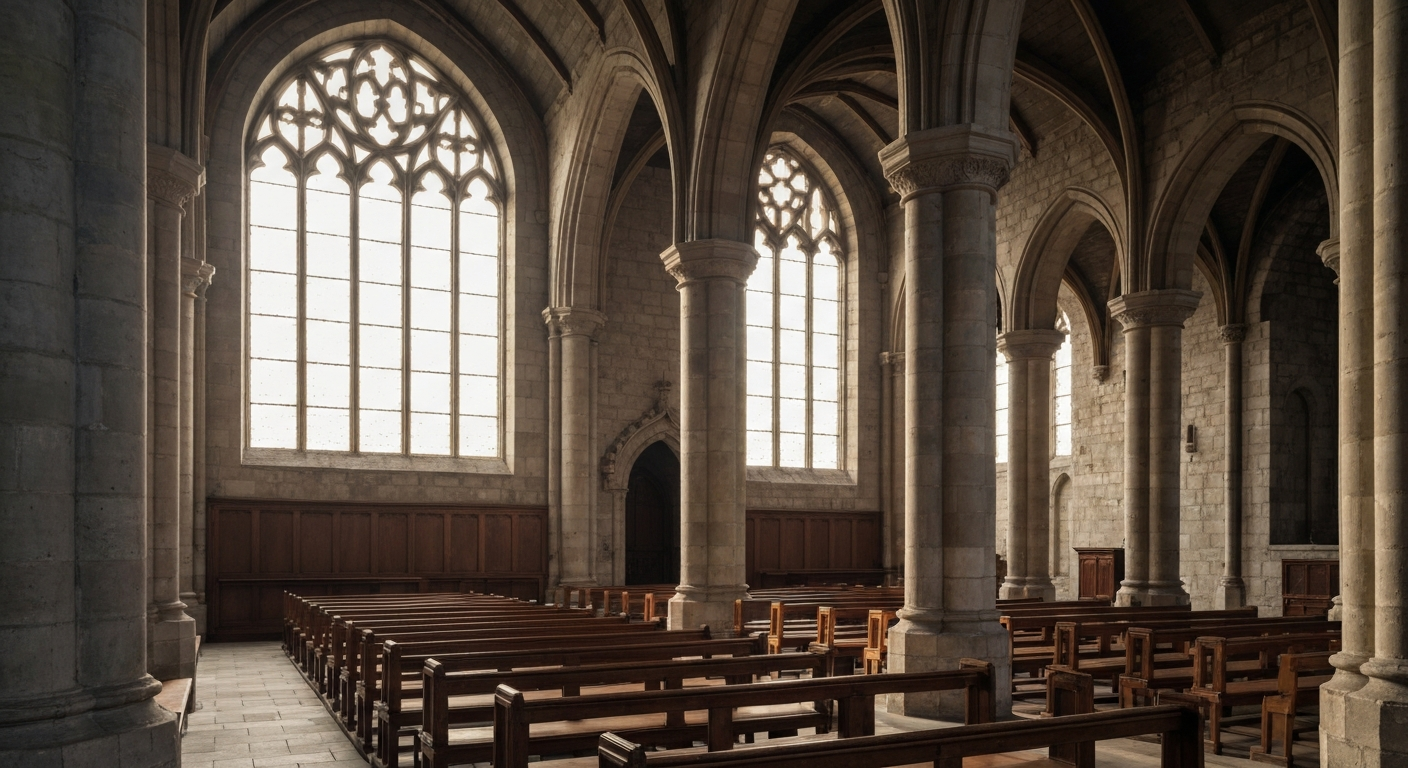
Catholic church requirements for the bride vary by diocese, parish, and individual priest. What does not vary is the underlying principle. The nave and sanctuary of a Catholic church is a consecrated space where the Eucharist is celebrated. The body, in Catholic theology, is a site of dignity rather than display. What this means in practical terms depends on who is setting the rules.
The strictest parishes, often the older ones in city centres where the pastor has been in the same building for twenty years, will send a bride back to the sacristy if she appears at the entrance in a strapless gown. The guidance from the Archdiocese of New York, for instance, specifies that arms and shoulders should be covered. Westminster Cathedral in London publishes modesty guidance for all services. The Basilica di Santa Maria Maggiore in Rome has a dress code enforced by security at the door that applies to tourists and brides alike.
Protestant denominations are less codified. A Church of England wedding in a medieval parish church in the Cotswolds typically requires nothing more than what the couple considers appropriate. A Baptist ceremony in the same market town may be more conservative. The operational difference is that in a Catholic ceremony, the priest has explicit authority over the ceremony space. In most Protestant ones, the vicar is operating within a tradition rather than enforcing a rule.
The Length Question
Catholic ceremonies run longer than most couples anticipate. A full Nuptial Mass, the rite that includes communion, runs between sixty and ninety minutes. The Liturgy of the Word, the readings, the homily, the exchange of vows, the rings, the Prayers of the Faithful: the sequence does not compress. Standing at the altar for the exchange of vows is one part of a ceremony that involves sitting, kneeling, standing, and processing.
A Church of England ceremony without communion runs shorter, typically thirty-five to fifty minutes. A civil ceremony in a licensed venue, though not a church wedding at all, runs fifteen to twenty-five minutes. The duration is a variable that affects everything from shoe choice to how the body behaves under the dress.
Three things happen to a body over ninety minutes in a warm church. The temperature inside old stone churches remains stable, often cooler than the exterior in summer. But standing and kneeling in a heavily structured gown is physical work. Bodies shift under the weight of the dress. Anything held in place by surface tension rather than adhesion begins to move.
The Bolero Calculation
A bolero over a backless or strapless dress creates a second layer of information that did not exist when the dress was fitted alone. The back coverage changes. The shoulder coverage changes. The way the dress falls at the neckline changes, because the bolero exerts a small but consistent downward or inward pressure on the fabric it covers.
Three practical effects follow. First, the bolero lifts slightly with arm movement. Every time the bride raises her arms, the bolero hem rises and the dress beneath it shifts. If there is a construction element inside the dress, a boning channel or a fitted bodice, the bolero's movement can work against it. Second, the bolero creates an additional layer of fabric over the bust. Anything underneath the dress that produces bulk, seams, hardware, underwire, boning, is compressed by the bolero and becomes visible from the front as a texture difference rather than a defined shape. Third, the neckline of the bolero may not align with the neckline of the dress. In photographs, the gap reads as an accidental cut rather than a designed one.
These are problems that show in photographs and nowhere else. The woman wearing the dress does not feel the gap. The photographer at the front of the nave during the recessional has a clear sightline to it.
Under a Cape
The cathedral-length cape is the current alternative to the bolero. Attached at the shoulder seams and falling past the waist, it satisfies shoulder and back coverage requirements while allowing the dress beneath to be worn without structural undergarment. The cape falls over the back. The back of the dress, and anything applied to the body underneath it, is covered during the ceremony.
The cape is removed at the reception. At that point, the dress appears in its intended form, and what was applied in the morning must function independently for the remaining eight or ten hours without the cape's coverage.
This is the specific calculation that the Bridal Kit is built for. Applied in the morning, it holds through the ceremony, the photographs in the churchyard with the cape on, the car to the reception, the moment the cape comes off, the dinner, the dancing. Medical-grade silicone covers from Korea, less than half a millimetre at the edge. The adhesive releases cleanly at the end. Nothing shifts during the ceremony. Nothing pulls at the end of the night.
The Internal Construction Question
A strapless dress holds itself in place by one of three mechanisms: boning channels sewn into the bodice that grip the ribcage, corset lacing at the back that tightens the structure against the body, or a combination of both. These structures are designed to eliminate the need for a bra. They are not designed to provide coverage. When a church requires coverage, they are unchanged by that requirement.
The complication is that the same structures that hold the dress in place also create seam lines visible through thin fabrics, and those seam lines do not disappear under a bolero or cape. They translate through the outer layer and appear in photographs as irregular texture. The solution is not to choose a less structured dress. The solution is to choose undergarment that provides no additional lines, seams, or hardware beyond what the dress requires.
What the dress's internal structure does not provide in terms of coverage, a skin-adhesive solution supplies without adding any structure of its own. The dress falls exactly as designed. The coverage is achieved. The bolero or cape adds its layer above. The photographs show the dress as it was intended, without additional information from underneath.
Logistics for the Day
Church weddings typically begin at eleven or twelve. The bride arrives at the church between fifteen and thirty minutes before. She has been in the dress for at least two hours at that point, often three if morning photographs at the house were planned. The ceremony runs to one o'clock. The photographs in the churchyard run to two. The reception begins at three or four. The evening runs to eleven or midnight.
That is a minimum of ten hours from dressing to the last dance. In a church that is twenty degrees and a reception venue that is twenty-four, with the body temperature that sustained standing and dancing produces. Any product applied in the morning has to function across that full range without adjustment, reapplication, or intervention.
The testing protocol that applies to beach weddings applies equally here. Wear the product for a simulated day before the wedding. Eight hours of normal activity in the dress fabric. If the product holds through the simulation, it holds through the ceremony. If it releases during the simulation, it releases during the ceremony too, at a moment that is not chosen.
After the Ceremony
The cape or bolero comes off in the car between the church and the reception. This is not a transition anyone photographs. It is the moment where the dress stops being a church dress and becomes a reception dress, and where everything that was counted on to function for the next eight hours must prove it can.
The women who have walked this sequence and found it works are the ones who solved it before the day. Not at the altar. Not in the car. In the week before, on a Tuesday morning, wearing the dress over the solution they chose, sitting at a kitchen table for four hours and then standing in the garden for one more.
The church ceremony requires what every ceremony requires: that the dress does what it was designed to do, from the entrance to the last photograph. The bolero is the answer to what the priest requires. What sits beneath the bolero is the answer to everything else.
The back is open. What holds her disappears.


