
Not One Place
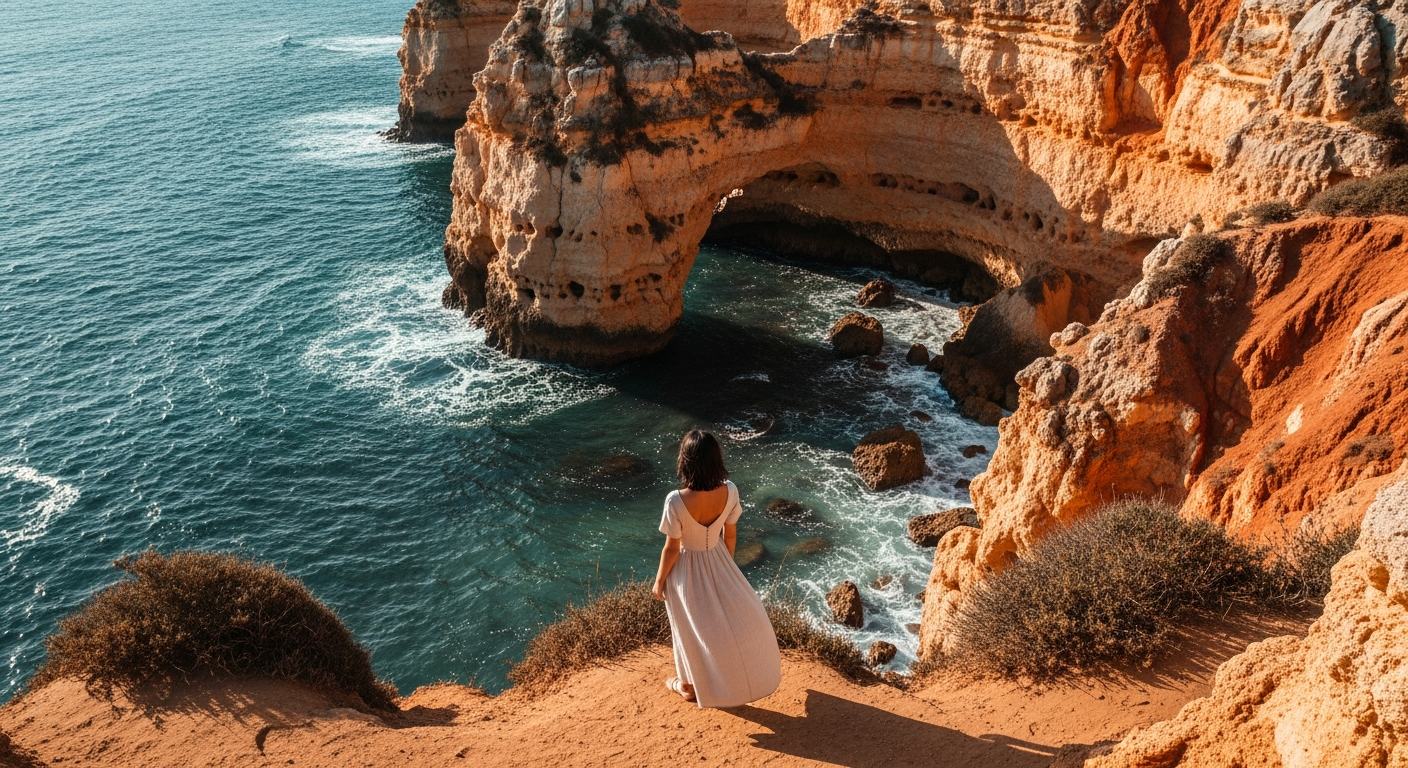
The Algarve is not one place. It is a hundred kilometres of coast where the geology changes every thirty minutes and the packing logic shifts accordingly. The beaches near Sagres in the far west are Atlantic: cold water, raw wind, the kind of sea that wakes you up and means it. The beaches near Tavira in the east are sheltered, shallow, almost Mediterranean in their temperature. The limestone cliffs of the central coast between Lagos and Lagoa are a third thing entirely: the rock the colour of honey, carved by the Atlantic into arches and sea caves and pillars that stand separate from the cliff face like sentinels.
Praia da Marinha, which the Michelin Guide lists among the ten most beautiful beaches in Europe, is the place most people are thinking of when they picture the Algarve. The cliffs above it are orange limestone. At the western edge of the beach the Arcos Naturais, a double sea arch, catches the light at low tide in a way that changes completely between morning and afternoon. The beach itself is small. In August it fills by nine. If you arrive at eight you have it to yourself and the stone is still in shadow and the water is the colour it was before the day decided what colour to be.
The Days and What They Ask
An Algarve summer day has a specific arc. Before ten: beach, before the heat arrives. Midday to three: a fish restaurant in a village, something cold, the unhurried lunch that southern Portugal has not abandoned despite the pressure to do so. The village of Burgau, fourteen kilometres from Lagos, is still largely intact: the whitewashed houses, the fishing boats drawn up on the ramp, the restaurant where the grilled dourada arrives with nothing added to it and requires nothing added.
The afternoon is for the cliffs or the boat or the town. Lagos itself has an old town that predates the earthquake of 1755 in its layout if not entirely in its buildings: cobbled streets, the Mercado de Escravos that is the only surviving slave market building in Europe, the Igreja de Santo Antonio with its gilded Baroque interior that no amount of tourist expectation quite prepares you for. It is a town that rewards walking without a plan.
The evening, in Lagos or anywhere along this coast, begins late and continues past midnight without apology. Dinner at nine-thirty or ten. A table outside where the air has cooled to something the afternoon refused to be. The dress you wore all day, with the sandals from the market and the hair that dried salt from the morning swim and has been left to its own arrangements since.
The Packing Logic
The central Algarve in July and August sits between thirty-two and thirty-eight degrees in the afternoon. The Atlantic moderates it slightly. The limestone cliffs reflect heat. The solution is the same one southern Portugal has known for centuries: linen, loose, in the colours of the landscape. Bone. Sand. The ochre of the cliffs at midday. Nothing dark.
Two linen dresses cover most situations. One lighter, for beach mornings and market afternoons. One with enough structure for the evening: a cut that holds its form, a neckline that has been considered. The Algarve evening dress code does not exist in any written form but is legible everywhere: the locals dress well for dinner in a way that looks effortless and is not. The effort happened at home, before the season started. It involves knowing which three things you own that do every job required of them.
For the evenings where the dress opens at the back or the neckline requires something underneath to hold its shape: medical-grade silicone covers from Korea sit flat under any fabric weight, hold through the warmth of an outdoor dinner table, and release cleanly. Good for fifteen or more wears. The Atlantic evening air carries a coolness that arrives around eleven and the dress needs to keep working through all of it.
What Does Not Belong
The Algarve coastline in summer is not interested in being impressed. The fishing village of Carvoeiro, five kilometres south of Lagoa, has managed the transition from fishing community to tourist destination with enough restraint that the original thing survives. The fish restaurant on the harbour still gets its fish from the boats. The espresso is the same price as it was three years ago. The customers who look right are the ones who dressed for a day in southern Portugal rather than for a performance of having arrived in southern Portugal. These are not the same thing and the coast can tell the difference.
Pack flat sandals that work on cobblestones and rock paths and restaurant floors without making you think about them. Pack a swimsuit that you can kayak in and a one-piece if the boat is involved. Pack one silk or fine linen layer for the evenings that cool faster than expected. Leave the rest.
The Atlantic in the Morning
The Atlantic off the Algarve is cold. Not Baltic cold. But cold enough to register, cold enough that the first entry every morning is a decision rather than a slide. By August the water at Meia Praia, the long flat beach stretching east from Lagos, has reached its annual warmth and still sits below most expectations. It does not matter. The shock is the point. The swim before nine, the cliffs orange above you and the water green where the shelf drops and blue where it does not, and the town still quiet behind: this is what the Algarve offers that nothing else does. You are not going to photograph it. You are going to be in it.
The summer in southern Portugal has been the same for long enough to have a quality that newer destinations lack: it knows what it is. The land is dry and the wine is cold and the fish is from this morning. The table is outside and the dinner ends when it ends. You will return the following year and the year after that. The only thing to bring is enough to be comfortable and nothing more.
For evenings that require a specific neckline to hold: the covers. For more on building the right infrastructure under a summer dress: what to wear under a backless dress.
Heading somewhere this summer? We will send you the packing checklist.


