
Puglia is the region you go to after you have done Rome, Florence, and the Amalfi Coast. After Rome, which is about the density of history. After Florence, which is about the art and the crowds and the art in the crowds. After the Amalfi, which is beautiful and almost impossible to navigate in summer. Puglia is flat, agricultural, and long. The coastline runs for eight hundred kilometres. The interior is olive groves and dry stone walls and the specific architecture of a region that organised itself around the land before it organised itself around the tourist.
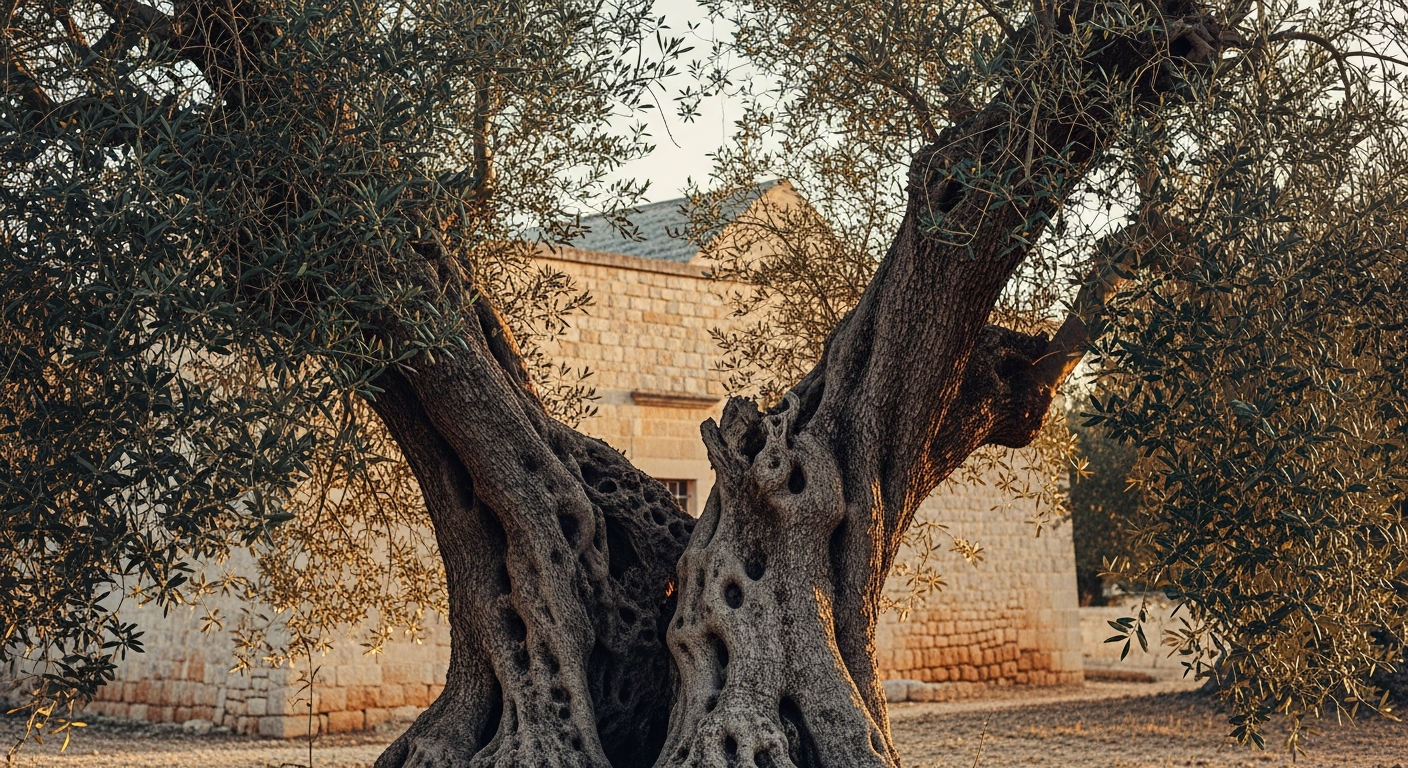
The masseria is the institution that makes Puglia legible. A fortified farmhouse, built between the fifteenth and eighteenth centuries, that served as the productive centre of a large agricultural estate. Some masserias became hotels. Most kept the olive groves. The trees in those groves are between three hundred and two thousand years old. Puglia produces approximately forty per cent of Italy's olive oil. The arithmetic of that statistic is visible in the landscape: the groves go on past the point where you stop counting the trees.
What the Masseria Is
The masseria at its best is not a boutique hotel that happens to be set in a farmhouse. It is a working agricultural property that happens to accept guests. The distinction matters when you arrive and find that the caciocavallo cheese at dinner came from the herd grazing fifty metres from the dining room, and that the olive oil in the dish was pressed from the harvest three months ago in the mill below the main building.
Masseria Il Frantoio, outside Ostuni, has been running since the seventeenth century. The olive oil tour goes out in a 1949 Fiat through groves with trees older than the farmhouse itself. Masseria Altemura in the Salento has sixty hectares of its own production: olives, vegetables, fruit, the kind of cooking that is only possible when the distance between the garden and the kitchen is thirty seconds. The architecture in both cases is the same grammar: thick stone walls, low arches, a central courtyard where the light changes through the day.
The courtyard is the social centre of the masseria evening. Tables are set in the open air under the stars or under the vine-covered pergola that runs along one wall. The service is unhurried. The kitchen sends out antipasti that keep arriving for thirty minutes before the pasta. You stop expecting them to stop coming and begin to understand that this is the meal, not a preparation for it.
Orecchiette and the Street Behind the Cathedral
In Bari Vecchia, the old town of Bari, the women who make orecchiette sit at stone tables on the street behind the Basilica di San Nicola. They have been making the pasta the same way for generations: a small piece of dough dragged across a rough wooden board with one thumb, forming the concave ear shape that gives the pasta its name. The motion is so specific and so fast that it looks mechanical until you watch a hand making it and understand that it cannot be mechanised.
Orecchiette alle cime di rapa is the canonical preparation: the pasta tossed with blanched turnip tops, garlic, anchovies, and a quantity of the pasta cooking water that emulsifies the sauce into something glossy and intensely green. The bitter vegetable and the pasta and the anchovy salt are calibrated to each other. This is not a recipe that was developed. It is the result of people eating what grew in this specific soil over a very long time.
Alberobello has the highest density of trulli in the region: the ancient circular limestone houses with conical stone roofs built without mortar, the UNESCO-listed Rione Monti quarter containing over fifteen hundred of them. Walk through in the early morning before the buses arrive. The scale is domestic, the streets narrow, the stone the pale grey of the local limestone. By ten o'clock the quarter is fully touristic. Before eight it is still simply a town where people live.
Primitivo and the Evening Table
Primitivo is the wine of the Puglia interior: bold, tannic, with a ripe fruit character that carries the warmth of the southern Italian summer. The best bottles come from the vineyards around Manduria, in the Taranto province, where the deep red soil produces the heaviest concentration of the grape. It is not a subtle wine. It is an honest one.
At a masseria dinner table in July, with the air warm after sunset and the moths gathering at the lanterns, the Primitivo and the orecchiette and the caciocavallo and the olive oil pressed from the trees you walked through that afternoon constitute a coherent argument for why the south of Italy operates differently from the north. The argument is made through the food and not through any other medium.
The Dress for a Masseria Evening
The masseria courtyard in the evening is the occasion Puglia is dressed for. Not formal. Not the black-tie of a hotel dining room. Something close to an elevated version of what you wore all day, but cleaner, more considered, the silk dress that was in the bottom of the bag that you shook out and put on at seven when the air cooled and the courtyard table was set.
The light at these tables is candlelight and the warm glow of stone walls that have been absorbing heat since noon. If the dress is cut with a low back or thin straps, a base layer that disappears into the fabric is not optional, it is what makes the dress function. Silicone covers from Korea, good for fifteen or more wears, are what allows the dress to do what it was designed to do through a three-hour dinner. The adhesive releases cleanly. Nothing interrupts the line. For how to pack a suitcase that handles both the active trulli morning and the masseria evening, the guide to building around a backless dress covers the specific logic.
The Time of the South
Puglia operates on a schedule that has nothing to do with the efficiency of the north. Lunch runs until four. The afternoon is for sleep or swimming or both. The evening begins at nine when the air has cooled enough to be worth inhabiting. The kitchens open late and close later. The pace is not laziness. It is the correct response to a climate that makes urgency biologically impossible in the middle of the day.
The region has been receiving visitors for less than twenty years in any significant number. Before that it was the south that Romans drove through on the way to the ferry to Greece. The masserias were agricultural operations. The trulli were houses. The orecchiette were made because the wheat was local and the hands were available. None of it was constructed for tourism. Some of what makes it worth visiting now is precisely that it was not.
Heading somewhere this summer? We will send you the packing checklist.


