
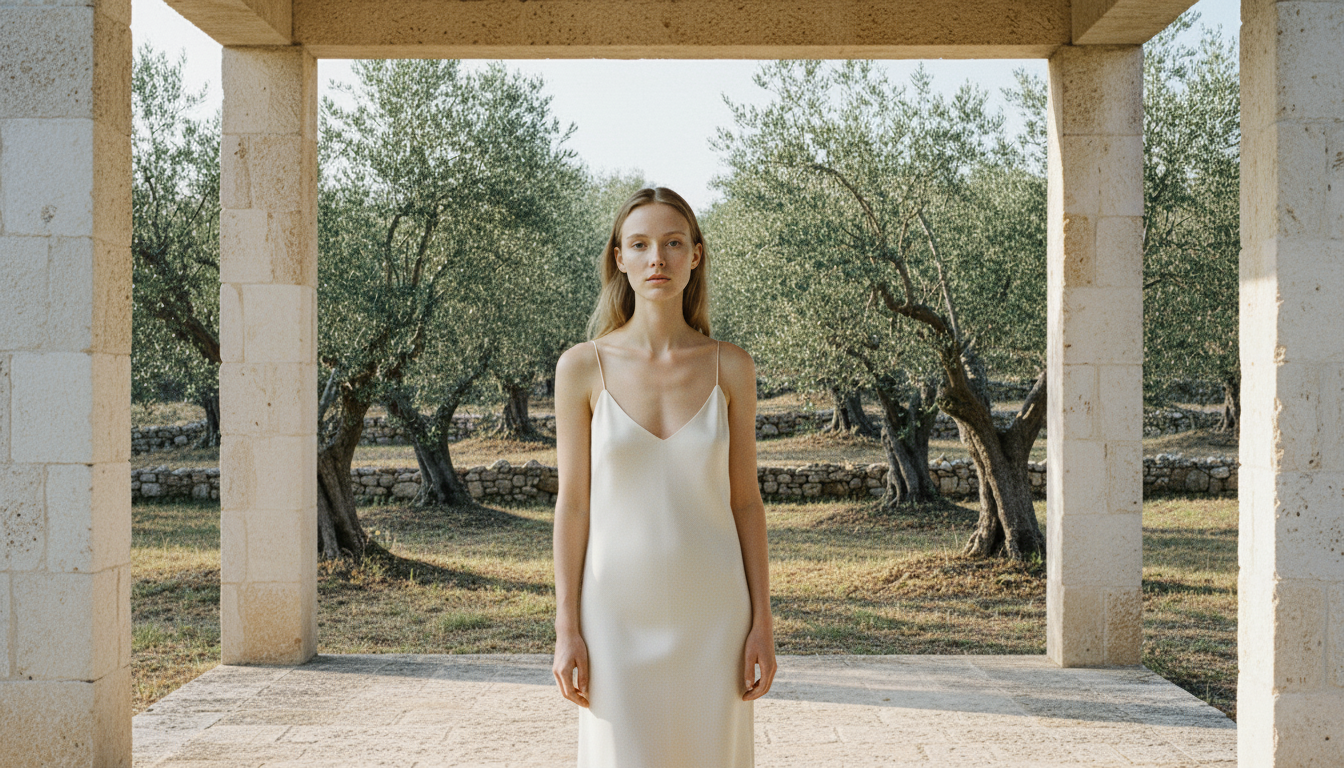
Santorini is the island everybody has already decided about before they arrive. The photographs have done their work: the blue domes, the white walls, the sunset over the caldera that turns the whole cliff face orange for twenty minutes before the light drops entirely. The photographs are accurate and they are not the point. The point is what happens at that table at nine in the evening, with a glass of Assyrtiko that tastes like volcanic mineral and cold sea water, when the last of the tour groups has descended to their buses and the caldera is quiet. Nobody at that table notices the silicone covers under the dress, only the wine and the view.
The Caldera and Its Villages
The caldera was formed 3,500 years ago when a volcanic eruption of sufficient force reshaped the entire eastern Mediterranean. The explosion is the leading candidate for the origin of the Atlantis myth. What it left behind is a crescent of cliffs up to three hundred metres high, with the active volcano still visible as a low dark island at the water's centre. The villages that cling to the western rim, Fira, Firostefani, Imerovigli, and Oia, are built directly into the pumice layer of the cliff face.
The traditional houses here are called yposkafa: hand-dug into the soft volcanic rock, with barrel-vaulted ceilings, narrow facades, and windows only at the front. The interior stays cool through the summer without any mechanical assistance, a function of the rock's thermal mass. Many of these cave houses are now hotel suites, the most expensive rooms in Santorini, precisely because the volcanic engineering works better than anything built later.
Imerovigli stands at the highest point of the caldera rim, above both Fira and Firostefani. It is the quieter choice. The path that runs along the rim from Imerovigli north to Oia is four kilometres of exposed cliff-edge walking with the caldera below on one side and the island interior on the other. Do it in the early morning when the light comes from the east and the path is largely empty. Wear something you can actually walk in. The views from the path are better than the views from Oia's famous sunset terrace because they do not require a crowd.
The Vine Baskets and the Volcanic Wine
Santorini's vineyards look unlike any others in Greece. The vines are trained into low circular baskets, kouloura, lying almost flat against the volcanic soil, with the grapes growing in the protected interior of the basket away from the wind. The technique developed because the meltemi, the northern summer wind, would destroy an upright vine. The vine baskets have been used here for at least four centuries. The soil they grow in has no clay. Phylloxera, the louse that destroyed European viticulture in the nineteenth century, never established on the island. These vines are on their own rootstocks, direct genetic continuations of vines planted centuries ago.
The grape is Assyrtiko. Domaine Sigalas and Estate Argyros make the reference versions: bone-dry, high in acid, mineral in the way that means you can taste the volcanic rock the vine grows in. The amber Vinsanto, made from sun-dried Assyrtiko and Aidani grapes, is the opposite: sweet, oxidative, aged in oak until it develops the complexity of caramel and dried fig and salt. The winery Santo Wines, a cooperative on the caldera rim, has a terrace where you taste both styles with the volcano visible across the water. The tasting is not designed for lingering, but the view is.
Oia at the Correct Hour
Oia's sunset is famous enough to generate a crowd that assembles by five in the afternoon to secure positions on the castle ruins above the village. The crowd is real and it is not the point. The correct approach to Oia is to arrive after the sunset spectators have dispersed, when the sky has gone from orange to deep blue and the cave-house hotels are lit from within and the restaurant terraces along the caldera edge are fully set. The village at nine in the evening is a different place entirely from what it is at seven.
The walk from Fira to Oia along the caldera path takes two to three hours. If you do it late in the day, arriving in Oia at dusk, you earn the village in the right order. The taxi back to Fira or your hotel takes fifteen minutes on the north road. The round-trip walk in the morning direction, returning by the inland road through the villages of Pyrgos and Megalochori, is the other option, and shows you an Santorini that is completely different from the caldera: farming land, old wine presses, a windmill still working in the right wind, cats in every courtyard.
The Caldera Table
The caldera restaurants operate on a variable that exists nowhere else: the view is so dominant that the food has historically been allowed to underperform. This is changing. The kitchens working with Santorini's own produce, the cherry tomatoes grown in the volcanic soil, the white aubergine, the fava from the yellow split peas grown on the island, are making real food in settings that happen to also have the caldera view. Order the fava first. It is the dish the island has been making the longest and the one it does best.
For an evening on a caldera terrace, in the period between the sunset crowd and the true late-night quiet, the dress is the event in a way it is nowhere else. The setting makes it so. A silk dress in a neutral colour catches the last light off the white walls and the candle reflection off the caldera sea simultaneously. What is needed beneath it is as considered as the dress. The evening runs long, the seating is close together on narrow terraces, the temperature drops after ten when the north wind returns. Medical-grade silicone covers, good for fifteen or more wears, are what the three-hour caldera dinner requires without interruption or adjustment. For the specific backless cuts that photograph against this setting, the backless guide covers each cut type.
For destination weddings on the caldera, where the ceremony at sunset and the dinner in the cave-house terrace are two separate occasions in the same evening, the wedding lingerie guide covers the transition.
What Santorini Gives You
The island is simultaneously overvisited and correctly rated. The 3,500-year-old volcanic geology, the pre-phylloxera vines, the yposkafa architecture that solves summer heat without electricity: these things are genuinely extraordinary and they do not become less so because everyone knows about them. Arrive in May or September when the caldera path is walkable and the tables at Oia are available without a month's advance booking. Eat the fava. Drink the Assyrtiko cold, in a glass that lets the mineral character come through. Watch the light on the white walls in the hour before sunset, when the villages are going about their business and the famous view is just the background to an ordinary afternoon.
Packed beside the linen. Designed to disappear.


