
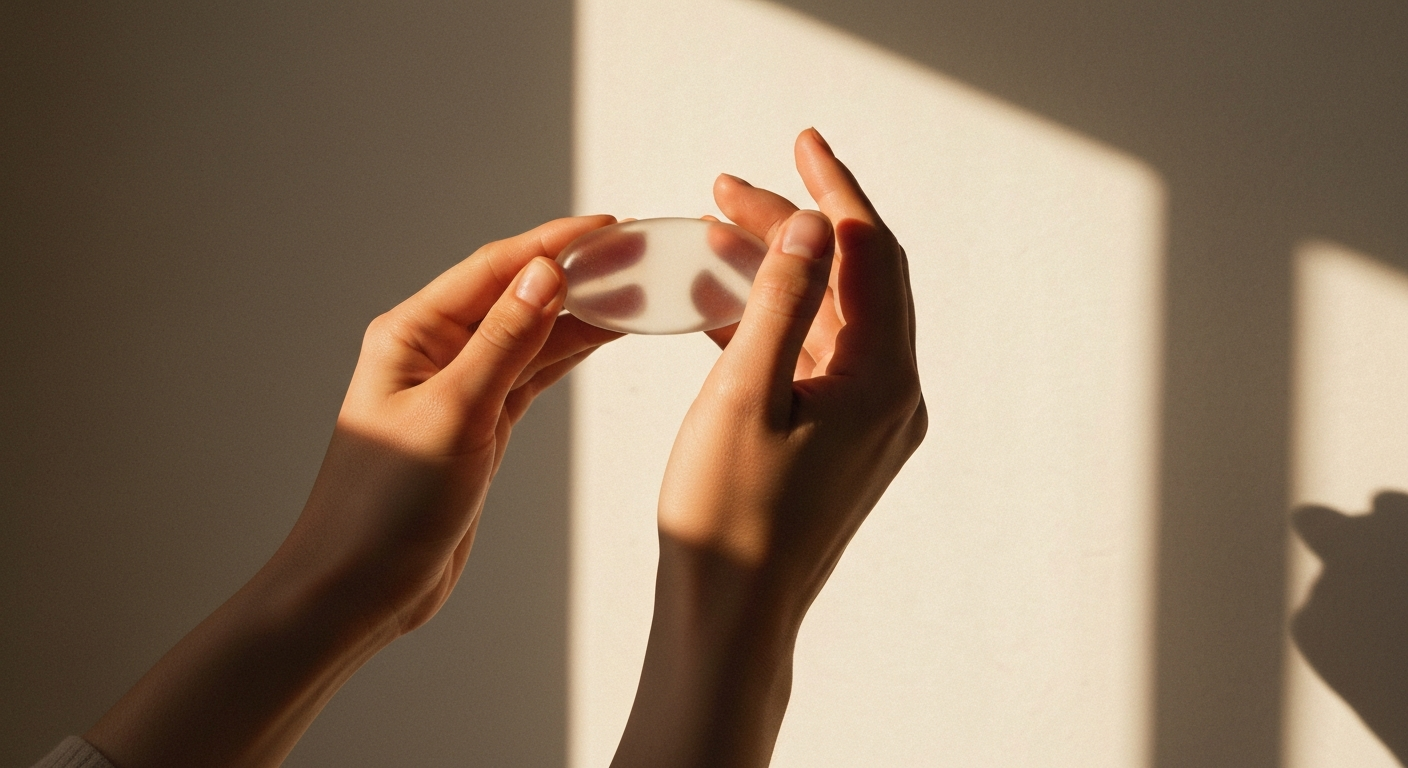
The short answer: a backless dress that nothing on the market could sit under invisibly. Every adhesive cover available showed at the edge through silk. Every strap-based alternative showed at the back. Silicone covers exist now because that gap did. Tested first on the dress that started the search. Rated now for 15 or more wears. Made in Korea, on manufacturing lines built for pharmaceutical tolerances. Everything below is the longer answer: why the gap had lasted a hundred years, and what closed it.
It started with a dress. A specific dress, a backless cut in deep navy silk, bought in Lisbon and worn exactly once because nothing that existed in the market at the time worked under it. Not correctly. Not in a way that allowed the dress to be the dress it was designed to be.
The adhesive covers that were available were thick at the edge, which meant they were visible through the silk. The bra alternatives had straps. They were not alternatives. The budget versions from fast-fashion suppliers lasted one wear and left residue. The premium versions from established lingerie houses were designed for a different problem, the problem of adding shape, not the problem of disappearing. The dress that should have been effortless was a management project every time it came off the hanger.
The Product That Did Not Exist
The question that Skindelle started with was specific: why did the invisible solution not exist at the quality level that the problem required? The dress problem had existed since the invention of the bias cut, a century ago. A hundred years of fashion had not produced a consistently reliable solution at a price accessible enough to make invisible lingerie the default rather than the exception.
The answer was manufacturing. The silicone adhesive technology that produces a product thin enough to be undetectable, with an adhesive strong enough to hold through a full day and gentle enough to release without damage, requires manufacturing infrastructure that did not exist in Portugal or Spain or France at the quality level needed. It existed in Korea. The pharmaceutical-grade silicone manufacturing base that Korea built over thirty years of cosmetics and medical device exports had created a cluster of factories operating at tolerances that European production had not matched.
The decision to source from Korea was not a cost decision. It was a quality decision. The medical-grade silicone products manufactured under Korean medical-grade standards perform at a level that the European alternatives do not. Ultra-thin at the edge, less than half a millimetre. The adhesive holds through a full day of heat and movement and releases cleanly. Good for fifteen or more wears. These are specifications that required the Korean manufacturing base to achieve consistently.
What the Brand Is Not
This is not a lingerie brand in the conventional sense. The conventional lingerie brand makes objects designed to be seen: lace, colour, structure that declares its presence. The product here is designed to disappear. It has no colour beyond the skin tone it approximates. It has no decorative elements. It performs exactly one function and performs it silently.
This is not a modest or minimal aesthetic imposed from outside. It is the logical consequence of what the product is for. A covering designed to be invisible under any fabric weight does not benefit from being visually elaborate. The Muji philosophy of "no brand quality goods" is the closest reference point: the thing that is good at its function without announcing itself. The announcement would be a contradiction.
The brand is also not a lifestyle brand because lifestyle brands define themselves differently. The Instagram feed of a lifestyle brand builds an aspirational world. This brand builds a practical one. The world where this product is necessary is a world where women are wearing dresses that require invisible support. That world is real and it is the world the brand lives in. The aspiration, such as it is, is operational: the dress works. The evening is possible. Nothing more elaborate than that.
The brand also does not occupy the territory that the large European lingerie houses occupy. Those houses built their reputations on lingerie as visible fashion, as costuming and spectacle. Underwear as performance object. That is a valid philosophy. It solves a different problem. The problem here is the opposite one: the evening when nothing can be visible, when the dress is the only thing and everything under it must have the grace of not existing. The market for this was underserved. The product to serve it required manufacturing that the European houses had not invested in because their product philosophy did not require it.
The Decision to Start
Starting a physical product business from Lisbon is not a rational decision measured against alternatives. The logistics of importing physical goods from South Korea, managing customs across EU markets, running Shopify operations with a team of two, competing for attention against incumbents with multi-million marketing budgets: none of this makes obvious economic sense. It makes the kind of sense that comes from having a specific product conviction and no alternative product to point to.
The conviction was this: the problem is real, the solution exists, and the channel between the manufacturing capability in Korea and the women in Europe who need it has not been built. Building that channel is the business. Not building a brand narrative around it or constructing a lifestyle proposition for it or raising a Series A to compete at scale immediately. Building the channel, getting the product right, finding the women who have the same frustrated relationship with this product category that started the whole thing.
The first customers confirmed the conviction. "I even got sores from the other ones. But not with these." That is Marie. "Skin did not pull so it did not hurt. And it had not lost any glue." That is Catarina. Two customers, two reviews, the specific language of people who had been managing a problem for a long time and found a product that solved it rather than managing it. This is what the product validation looked like. It did not look like a viral moment. It looked like relief.
What the Brand Is Building
The medium-term project is distribution: getting the product to the women in Europe, in the Nordics, in Southern Europe and the UK, who have the same relationship with this product category that the founder had on the night of that first backless dress. The women who have a dress with the tags still on it because they cannot solve the underwear question. The women who have been buying inferior products that work for one wear and leave residue and cannot be sent back because they have been tried on.
The long-term project is simpler: be the brand that solved the problem. Not the most fashionable brand in the category, not the most visible, not the one with the most collaborations. The one that made the product that works. The covers that are good for fifteen or more wears. The adhesive that holds and releases cleanly. The edge that is less than half a millimetre. The product you order and stop thinking about because it does the job every time.
The full story of the manufacturing partnership that makes the product possible is at the Korea story. It is a story about precision manufacturing and the long investment in pharmaceutical-grade silicone production that made the correct solution to the problem possible. Without that manufacturing base, the product does not exist at the quality level the problem requires. With it, it does. That is the supply chain as founder story, told plainly, without the language of craft or artisan or heritage. The product is good because the factory is good. The factory is good because Korea built the infrastructure to make it so. That is the whole story.
The navy silk dress hangs in a wardrobe in Lisbon. It gets worn now. Not once. Regularly.
The covers. Designed to disappear under everything.

Matte and invisible under sheer.
€29,90€5,98 a pair
Korean silicone · 15+ wears per pair
“I carry them with me everywhere.”
Carol M.

