
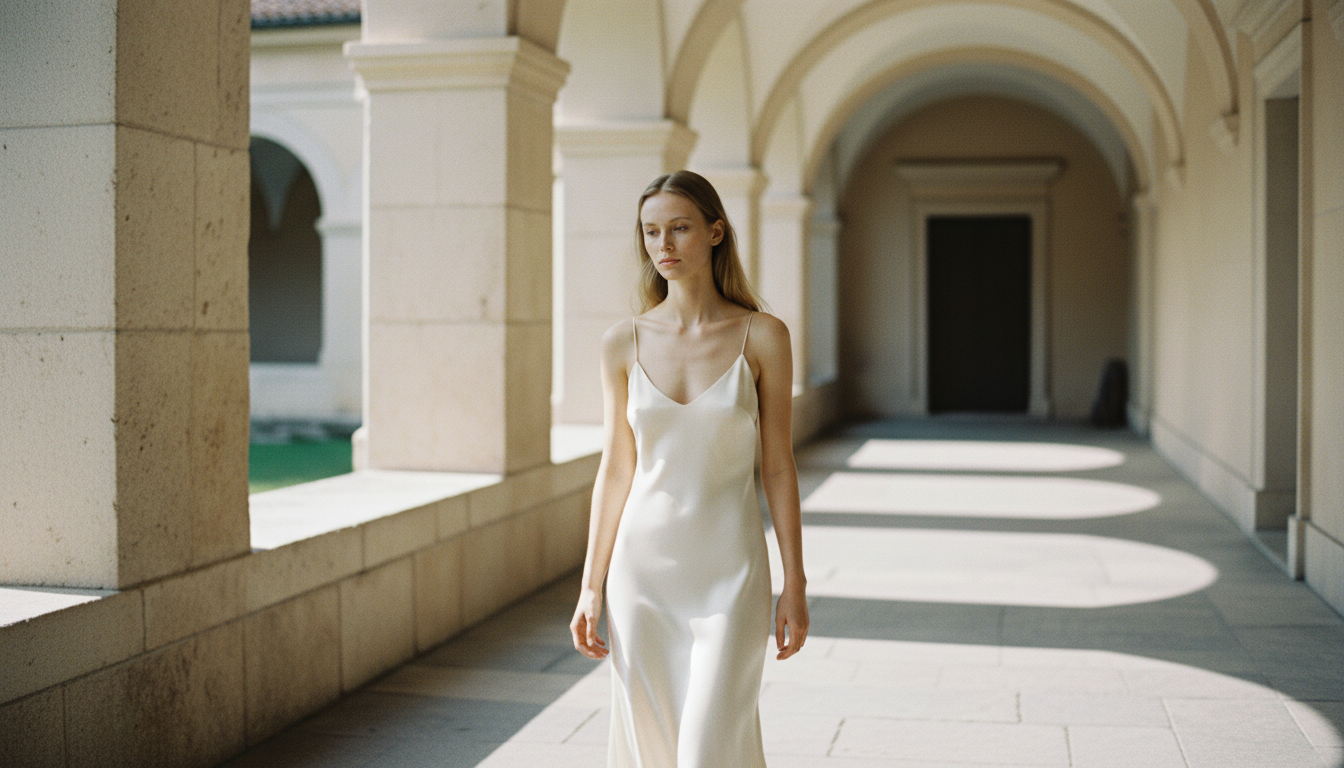
Sicily has the best baroque in Europe, and the southeast has the best baroque in Sicily. This is not an opinion held loosely. After the 1693 earthquake levelled eleven cities across the Val di Noto, what was rebuilt was an architecture produced at the height of a single stylistic moment, unfragmented by later additions or economic constraint. The result is a coherent landscape of honey-coloured limestone that has had three hundred years to warm and settle and deepen. UNESCO listed eight towns in 2002. None of them look like the certificate. The same economy that shaped the architecture applies in August, when heat reduces most outfits to a thin dress and a pair of silicone covers.
Noto is where you begin. It was rebuilt four kilometres from its original site, on a new hill, on a new plan. Three main roads run east to west so the sun illuminates them for the full day. The entrance from the east passes under the Arco di Trionfo. You walk through the arch and the Corso Vittorio Emanuele opens in front of you, flanked by facades that were built to be seen from a distance and also from close enough to read the stone.
The stone is a local limestone that was, at the time of construction, soft enough to carve in detail and hardens over centuries as it absorbs light and air. The Palazzo Nicolaci Villadorata, on Via Corrado Nicolaci, has balconies whose brackets are shaped into horses, lions, sphinxes, and figures that resist easy classification. The sculptor is unknown. The ambition is not. Below the balconies, the street narrows. In May, it is covered entirely in flower petals for the Infiorata festival: pigmented petals pressed into patterns the width of the road.
August is not May. In August the Corso holds the heat from midday, and by three in the afternoon the stone is radiating warmth you can feel from a metre away. The local solution is to stop moving between noon and five. The streets empty. The shutters close. The correct place to be at two in the afternoon is inside, horizontal, in a room with thick walls.
Caffè Sicilia is on the Corso, at number 125, and has been run by the Assenza family since 1892. Corrado Assenza, the fourth generation, was called by Alain Ducasse the greatest confectioner in the world. He works with Bronte pistachios, with Romana almonds that his family helped pull back from near-extinction, with local fruit and seasonal aromatics. His granita is not flavoured ice. It is the distillation of a specific fruit grown in specific soil in a specific season.
Order the lemon granita with a brioche. Eat it standing at the bar, the way Sicilians do. The brioche is soft enough to dip into the granita, and you should do this. The combination is the reason the café opens early and fills immediately. Do not skip it for any reason including the heat.
From Noto, the circuit runs south and east. Ragusa Ibla sits in a valley below its modern twin and contains, among its baroque set pieces, the church of San Giorgio by Rosario Gagliardi, completed in 1775. The facade is three tiers of increasing intricacy, like a sentence building to a conclusion it delays as long as possible. There are 250 steps from the lower road. At the top, a square and a view of terracotta rooftops folding down toward the valley floor.
Modica is twenty minutes by car. The Aztec cacao trade passed through here in the sixteenth century, and the processing method it left behind produces a chocolate that does not melt at room temperature because it contains no cocoa butter. It is gritty, intense, and unlike anything that calls itself chocolate elsewhere. Buy it at a small shop rather than the tourist operations on the main street. The main street operations are efficient. The small shops are interested in whether you understand what you are buying.
The evenings in southeast Sicily in July and August are 38 degrees until nine o'clock and then drop, quickly, to something manageable. The social convention is to dress well for dinner regardless of temperature. This is not tourism performance; it is how the region has always organised its evenings. The Sicilians who eat at midnight on the terrace at Ragusa Ibla are not performing for anyone. They are eating at midnight because the afternoon was impossible and the evening is the point.
A dress with a clean line and an open back is the correct answer for that hour. Linen moves. Cotton breathes. The question, in heat that sits above 35 degrees until sundown, is what supports the neckline without adding fabric or heat. Medical-grade silicone covers from Korea, good for fifteen or more wears, invisible under any fabric weight, release cleanly in the shower and leave no residue on silk or linen. The adhesive holds through a dinner that runs past midnight in outdoor heat. Nothing shifts.
The cathedral of Noto was completed in 1770 and partially collapsed in 1996 when a dome failed. The restoration took thirteen years. The current dome is the one you see, not the original, a loss or a reminder of what baroque ambition costs to maintain. The interior is pale and cool even in summer. The staircase rising to the facade is broad and white and at seven in the evening the families of Noto come here the way families everywhere come to the public space at the centre of their lives.
Children run across the staircase. Old men in linen shirts talk on the benches. The light on the Palazzo Ducezio, the town hall directly across the piazza, is gold at this hour. Rosario Gagliardi, who designed much of what you see in Noto and Ragusa and Modica, left no biography that has survived. What survives is the work, built to last and standing.
Stay in the Val di Noto for five nights minimum. One to arrive and understand the scale. One each for Ragusa, Modica, and the coast at Marzamemi, where the fishermen's quarter is now a collection of restaurants around a square and the tuna fishing that made the town has gone but the tables remain. The fifth night, go nowhere. Eat where you are staying. Let the heat of the day fall away at the pace it wants to.
If you are here in September, the stone has absorbed the entire summer and radiates long after dark. The light is amber instead of white. The crowds are the locals again. That is when the baroque is most itself: not a tourist attraction but a backdrop to the ordinary life that has been lived against it for three centuries.
Nothing in northern Europe prepares you for what light does to limestone at this latitude. See it once and the standard for what a city should look like shifts permanently.
For evenings in this heat, what to wear under a backless dress is the practical starting point.
The product referenced above is available at Skindelle.
Packed beside the linen. Designed to disappear.


