
The short answer: silicone covers, reused across the day rather than replaced between looks. Eight outfit changes in twelve hours leaves no time for a bra fitted to each neckline, and no stylist wants to solve the same problem eight times. One pair of silicone covers, applied once in the morning, holds under a backless look, a sheer one and a strapless one without coming off between changes. They read as nothing under the camera and add nothing to the quick-change routine already running on a tight clock. Everything below is the longer answer: how a shoot day is actually built, and where the wardrobe problems really happen.
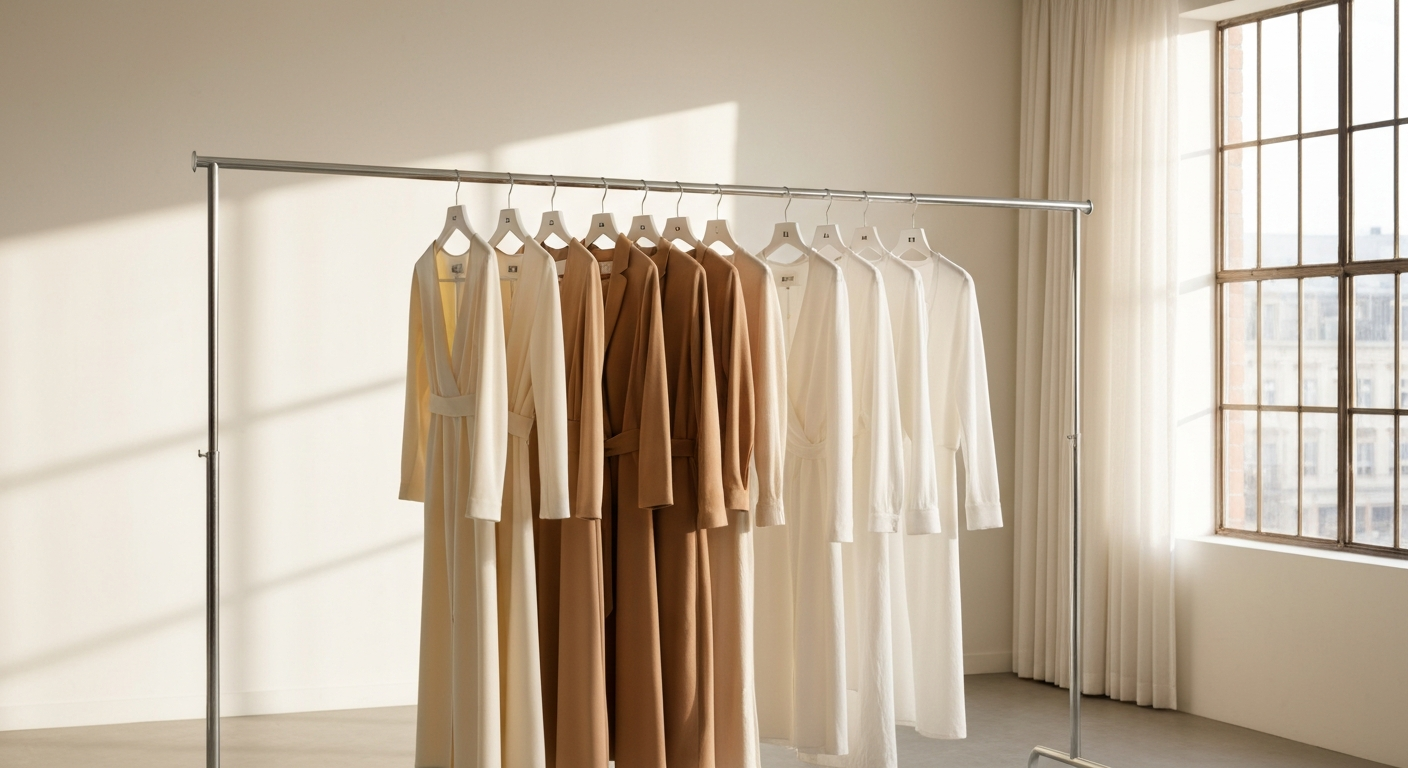
The call sheet for an editorial shoot reads like a contract with a specific kind of time. Six in the morning for hair and makeup. Seven-thirty for first look. Lunch at one if the morning runs to schedule, which it rarely does. Wrap at six or seven, depending on the natural light and how many setups the photographer needs for the final look. Twelve hours between the model's arrival and her departure. Eight looks hanging on the rack in order, each one numbered, each one with its accessories bagged and tagged, each one carrying a set of practical problems that the stylist resolved in the week of prep before this morning.
Among those problems, one repeats across every shoot and rarely appears on any call sheet. What goes under the garment, and whether it will still be in place when look eight goes in front of the camera at five in the afternoon.
The Architecture of a Shoot Day
The first two hours of a shoot day exist in a different tempo from the rest. Hair and makeup work in sequence or parallel depending on the production size. A two-model shoot with separate stations runs faster. A single model who requires both a hairstyle change and a makeup change between looks requires the team to plan the look sequence around those transitions, not the other way around.
The stylist is dressing the model for look one while hair is still finishing. She is already thinking about look two. The quick-change protocol is established before shooting begins: which items come off over the head, which ones open at the back, which accessories need to be removed in what order so nothing snags on the hair. A look that requires three minutes to undress and four to dress in is a seven-minute transition. Five of those looks in a day is thirty-five minutes of transition time that does not appear on the call sheet but is a real constraint on the shooting schedule.
What is under the garment is part of that calculation. A model who needs to remove a bra between looks one and two, reapply body tape for look two, remove the tape between looks two and three, and return to no adhesion for look three is losing time at each transition. The tape application requires two minutes minimum when done correctly. Removal requires care when the skin has been warm against adhesive for two hours. The stylist is managing this alongside the garment transitions, the accessory changes, the hair and makeup adjustments between looks. The arithmetic of the shoot day is tight.
The Heat Question
Studio lighting runs warm. A standard editorial setup using profoto strobes or continuous lighting at the levels required for commercial quality output raises the ambient temperature around the subject by four to eight degrees over ambient. A model working under this lighting for two to three hours is warmer than the temperature in the room suggests. Skin that began the day dry and cool is slightly warm and slightly damp by look three.
This is the failure condition for most adhesive solutions. Fashion tape, which holds reliably from the first look of the morning, begins losing adhesion at the combination of skin warmth and surface moisture. The precise failure point varies by product and by individual skin type, but the category failure is predictable: somewhere between hours four and six, a fashion tape application that was holding the neckline of a light silk blouse in the morning is no longer holding it at the same tension. The stylist who relies on fashion tape as her primary adhesion solution is returning to the model between looks to re-tape, burning transition time, and creating a situation where the skin accumulates adhesive residue across multiple reapplications.
Body tape holds longer. The fabric-backed, medical-grade adhesive products designed for skin contact are engineered for exactly this condition: prolonged wear, body heat, some perspiration. They hold through look five and look six in conditions that have already defeated fashion tape. The tradeoff is removal. A body tape application that has been on skin for eight hours under studio lighting is adhered at a level that requires slow, careful removal. A stylist who does this incorrectly leaves the skin red and abraded for the final looks. The photographs of look seven and look eight will carry that mark on the skin if the removal on look six was rushed.
The Six-Hour Point
There is a specific quality to the failure that happens at the six-hour mark of a long shoot day. It is not a sudden failure. It is a gradual loss of precision. The neckline that was sitting exactly right at ten in the morning has drifted two centimetres by four in the afternoon. The back opening that was clean is now slightly off-centre. The edge of the tape that was invisible is catching light differently as the skin temperature has changed.
Experienced stylists plan for this. The looks scheduled for the afternoon are not the ones that require the most precise adhesion. The looks with the most demanding coverage or adhesion requirements are placed in the first half of the day, when the adhesives are fresh and the skin is cool. The looks that can accommodate more movement, looser necklines, more structural garments, run in the afternoon. This is a scheduling discipline, not a workaround. It shapes the look order on the call sheet before the day begins.
The alternative is a foundation layer that does not have a failure point tied to heat and time. The silicone covers that adhere directly to skin without tape infrastructure hold on a different basis. Medical-grade silicone from Korea, less than half a millimetre at the edge, good for fifteen or more wears. The adhesive is not temperature-sensitive at the range a working body generates. A model wearing them at six in the morning is wearing them in the same state at six in the evening. There is no drift, no reapplication, no accumulated adhesive residue. The removal is clean because the silicone does not bond to fabric and does not cure against the skin the way tape adhesives do over time.
The Quick-Change Protocol
In a well-run quick-change, the model knows what she is stepping out of and what she is stepping into before the photographer finishes reviewing the last set of images. The stylist has the next look laid out in the order of dressing: underwear layer first, then the garment, then the outer layer, then accessories. She is not searching the rack. She is not undoing a bag to find the earring she needs. The entire transition is choreographed.
The element that disrupts a quick-change most reliably is the adhesive layer. Body tape being removed under time pressure comes off wrong. A model who winces on removal and the stylist who slows down to do it correctly are both burning time the photographer has already allocated to the next setup. An adhesive solution that comes off cleanly and quickly at the end of a look is not a minor product feature. It is a production efficiency factor on every shoot day that includes it.
The transition from a taped look to a non-taped look is the hardest transition in the sequence. The skin needs to be clean, adhesive-free, and undamaged for the next look. The stylist carries adhesive remover wipes for exactly this reason. But adhesive remover on skin that has been taped for four hours under studio lights still requires time for the skin to settle before the next application. The look sequence has to account for this. A taped look cannot be immediately followed by another taped look on a different area of the body without a short interval. The call sheet, built in half-hour intervals at most, has no natural space for this interval unless the look order was built with it in mind.
Continuity Across the Day
Editorial shoots do not always run in story sequence. The look order on the call sheet is determined by location, lighting setup, and model availability. Look eight in the story might shoot at noon. Look three might shoot at five. The stylist maintains continuity records across the day: photographs of each look as it appeared on set, notes on every adhesive application including placement and product, notes on any reapplication or correction. These records are not for the magazine. They are for the next shoot day if the production runs over, or for the retoucher if something needs to be consistent across looks that appear in the same spread.
A look that has a specific coverage solution under it needs to match across every frame it appears in. If the morning application of look two was precise and the afternoon reshoot of the same look was slightly different, the inconsistency appears in the final edit as something the retoucher has to address. The stylist's notes prevent this. The better prevention is using a coverage solution that does not shift across the day, which makes the continuity record a confirmation of what happened rather than a correction plan for what drifted.
What Holds at Hour Twelve
The final look of the day is shot in conditions that are the hardest for everything that was applied in the morning. The lighting has been adjusted for the afternoon. The model is working through twelve hours of physical and mental effort. The garments have been on and off eight times. The set has been rearranged twice. The stylist has been standing since six o'clock.
The coverage that holds at hour twelve without intervention is the coverage that was chosen, rather than arrived at by process of elimination. A stylist who built look eight around an adhesive solution she has used across a hundred shoot days and has never seen fail at the six-hour point is not managing a problem at five in the afternoon. She is finishing the day. The backless and low-cut looks that anchor the end of the shoot book are not anxiety. They are solved problems in the kit that was packed the night before.
The twelve-hour shoot day is a test of preparation, not endurance. The solutions that hold are the ones that were chosen correctly before the call time. Everything after that is execution.
The covers. Designed to disappear under everything.

Matte and invisible under sheer.
€29,90€5,98 a pair
Korean silicone · 15+ wears per pair
“I carry them with me everywhere.”
Carol M.

