
The number that gets cited
Michelin stars per square kilometre, higher here than anywhere else on earth. There are roughly twenty starred restaurants within walking distance of La Concha beach. Arzak, Elena and Juan Mari Arzak's three-star institution on the Miraconcha road, has held those stars since 1989. Mugaritz, Andoni Luis Aduriz's two-star restaurant in the hills above the city, operates in a register so experimental it regularly appears on lists of the world's most challenging dining experiences. These are the headline facts.
Whatever the dress code turns out to be across the Old Town’s restaurants, silicone covers work underneath it.
They are less interesting than what happens in the Parte Vieja at seven in the evening.
The Parte Vieja
The old town of San Sebastian sits between Monte Urgull and the mouth of the Urumea river, ten minutes' walk from La Concha beach. It is compact: a dense grid of narrow pedestrian streets packing more pintxos bars per square metre than any other comparable district in Europe. The atmosphere is not refined. The lighting in most bars is fluorescent. The crowd at Bar Ganbara on Calle San Jeronimo 21 at 7pm is pressed shoulder-to-shoulder and the noise is the particular noise of a hundred conversations happening simultaneously in Euskera and Castellano and enough other languages to suggest the city's reputation has reached everywhere.
This is not incidental. It is the whole point.
Pintxos bars open twice daily: 1pm to 3pm and 7pm to 9:30pm. Outside those windows the shutters come down and the bars empty. The locals are visibly impatient with tourists who treat the evening session as a restaurant, occupying a single bar for two hours rather than grazing across four or five. The correct approach is two pintxos and one drink per stop, then move.
Calle Fermin Calbeton
The street called Calle Fermin Calbeton is the highest-concentration corridor in the old town. Bar Borda Berri at number twelve does a braised veal cheek pintxo served on a small round of bread, with a sauce reduced to the consistency of lacquer. People return to San Sebastian specifically for this pintxo.
Bar Txepetxa on Calle Pescaderia 5 specialises almost entirely in anchovies. Antxoas. The menu runs to a dozen configurations: antxoas with piquillo pepper, with egg cream, with sea urchin. The pintxos are five bites each and priced at two or three euros. The wine is txakoli, the local Basque white: bracingly acidic, low-alcohol, slightly effervescent, poured from height to aerate and produce a small head. The pour is performative and correct.
Bar La Vina on Calle 31 de Agosto is internationally famous for its cheesecake. The fame is deserved. The recipe is simple: cream cheese, eggs, sugar, cream, a whisper of flour, baked at high heat until the exterior is deeply caramelised and the interior is barely set. It arrives at room temperature and collapses gently under the spoon. Order it after the anchovies and before the next bar.
La Cuchara de San Telmo on Calle 31 de Agosto works in the modern pintxos idiom: smaller portions, more technique, occasional foam. The txangurro, spider crab dressed and baked in its shell, is the most direct route to the flavour of Basque cooking: briny, rich, finished with olive oil and a little brandy.
The Format
This format produces a particular kind of evening: ambulatory, social, cumulative. You are eating continuously while also being in constant motion through the streets of the old town. By 9pm you have covered four bars and perhaps eight pintxos per person and you are not full but you are satisfied in a way that sitting at a single table does not replicate.
The transition to a Michelin dinner requires a change of register. Clean up. The bar-to-restaurant gap in San Sebastian is logistical rather than aesthetic: the restaurants are within walking distance, but the clothes you wore into Bar Ganbara at 7pm should be able to carry you into Arzak at 9pm without commentary. Nothing flamboyant. Nothing that annotates itself. A clean line from neck to hem, the kind of dressing that makes the room look better without announcing the intention to do so.
The best dressing in the Parte Vieja is invisible: something simple enough to disappear into the crowd but precise enough to read correctly when the light catches it. The invisible solution beneath the blouse is the same one that works from the first bar to the last table. Read more on what the backless top requires when the evening runs long.
Arzak
Elena Arzak, who runs the kitchen with her father Juan Mari, works in a style she describes as Basque cuisine of the twenty-first century. The foundation is regional: txangurro, the spider crab preparation that appears on menus across the Basque Country; kokotxas, the gelatinous collar of the cod jaw cooked in its own natural gelatin; bacalao in its various salt-preserved forms. The treatment is contemporary. An egg with white caviar. Monkfish with green olive sauce.
The room at Arzak is not formal in the way that Michelin rooms in Paris or London are formal. The service is warm and specific without being theatrical. The wine list runs deep in Rioja and is worth the time.
Mugaritz, twenty minutes from the city in the hills above Renteria, operates differently. Andoni Luis Aduriz's current menu includes what the kitchen describes as edible earth: mushroom preparations compressed and dehydrated to the density and appearance of soil, and roasted marrow presented as a statement about the borderline between cooking and chemistry. The restaurant is open April through December. It is polarising. This is a design decision rather than an accident. You come to Mugaritz for the argument, not the comfort. The comfort is at Arzak.
La Concha
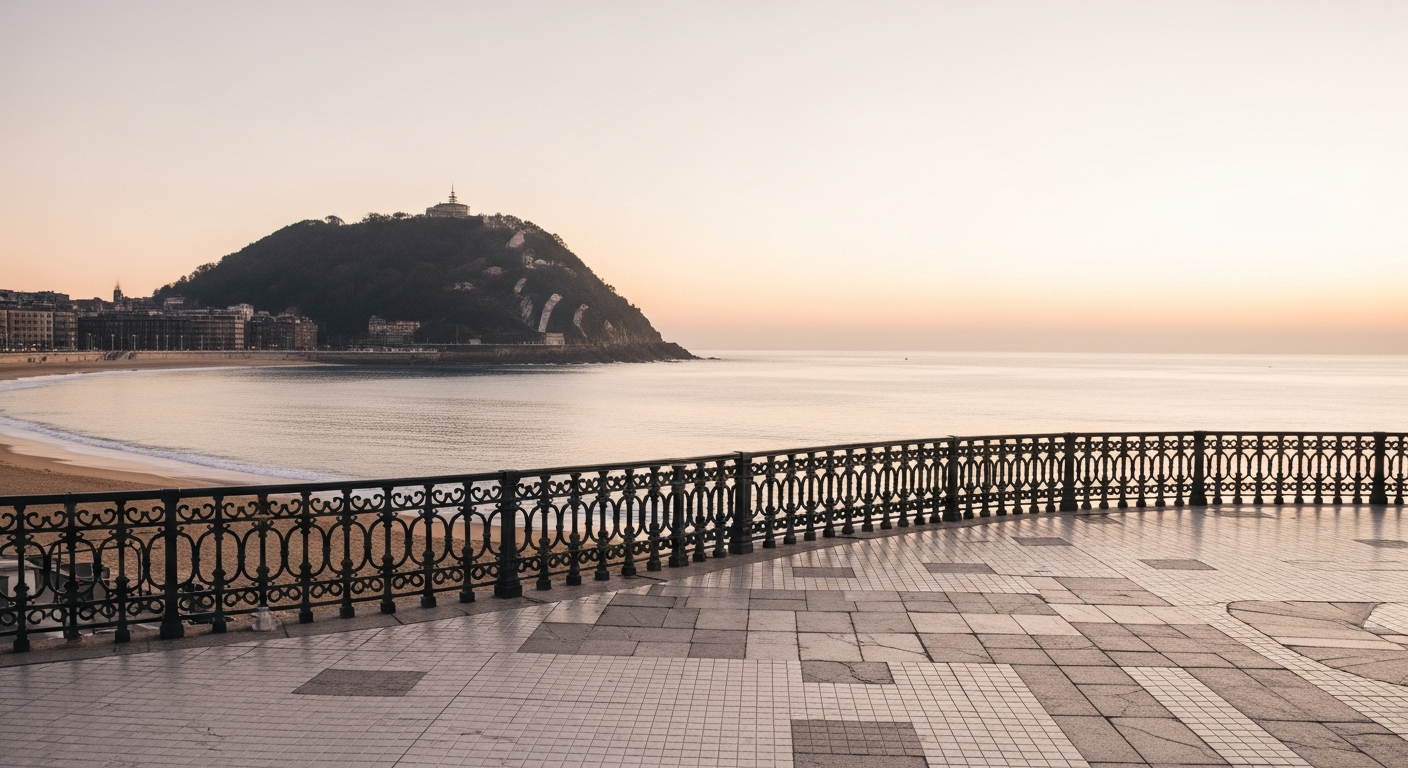
La Concha beach takes its name from its shape: a shell-curve of fine sand between Monte Urgull to the east and Monte Igueldo to the west, with the small island of Santa Clara sitting in the bay. The ornate cast-iron railings of the Paseo de la Concha, installed in the 1890s, run along the promenade above the beach.
In June it fills by ten in the morning. In September the water temperature reaches twenty degrees and the beach stays swimmable through the afternoon. The beach at 8am, before the crowd arrives, is the argument for staying in San Sebastian an extra day. Walk west along the promenade to the point where the city ends and the cliffs begin. Look back at the bay.
The Basques have always insisted this is the best city in Europe to eat in. They are not wrong. But the bay in the morning, before the pintxos bars open and before anyone has made a reservation, is the more private argument for the place. Nobody is performing anything. The sea is just the sea.
Frequently asked questions
What's the etiquette for pintxos bars in San Sebastian's old town?
Pintxos bars in the Parte Vieja open twice a day, 1pm to 3pm and 7pm to 9:30pm, then shutter. The correct approach is two pintxos and one drink per stop before moving to the next bar, rather than settling into a single bar for two hours the way tourists sometimes do.
What should you order on Calle Fermin Calbeton?
Calle Fermin Calbeton is the old town's highest-concentration pintxos corridor. Bar Borda Berri is known for a braised veal cheek pintxo, Bar Txepetxa specialises in anchovies served with txakoli wine, Bar La Vina is internationally known for its cheesecake, and La Cuchara de San Telmo serves a modern txangurro, spider crab baked in its shell.
What's the difference between eating at Arzak and Mugaritz?
Arzak, run by Elena Arzak with her father Juan Mari, has held three Michelin stars since 1989 and builds Basque cuisine around txangurro, kokotxas, and bacalao with contemporary touches. Mugaritz, twenty minutes away in the hills above Renteria, holds two stars, is open April through December, and is deliberately polarising, with dishes like edible earth.
What do you wear from pintxos bars straight into a Michelin dinner in San Sebastian?
The bar-to-restaurant gap in San Sebastian is logistical rather than aesthetic, since the Michelin restaurants sit within walking distance of the old town. Clothes worn into a pintxos bar at 7pm should carry through to dinner at 9pm without changing: a clean line from neck to hem, nothing flamboyant or attention-drawing.
Packed beside the linen. Designed to disappear.


