
Sifnos is the island you go to after you have done the other islands. After Mykonos, which is about the night. After Santorini, which is about the view. After Paros, which is the reasonable middle ground between the two. Sifnos is about the table, and the food here is different in origin and in seriousness from what you get elsewhere in the Cyclades. Nikolaos Tselementes was born here in 1878. He wrote the book that codified Greek cuisine in the twentieth century. His island has been cooking seriously ever since.
Kastro in the Morning
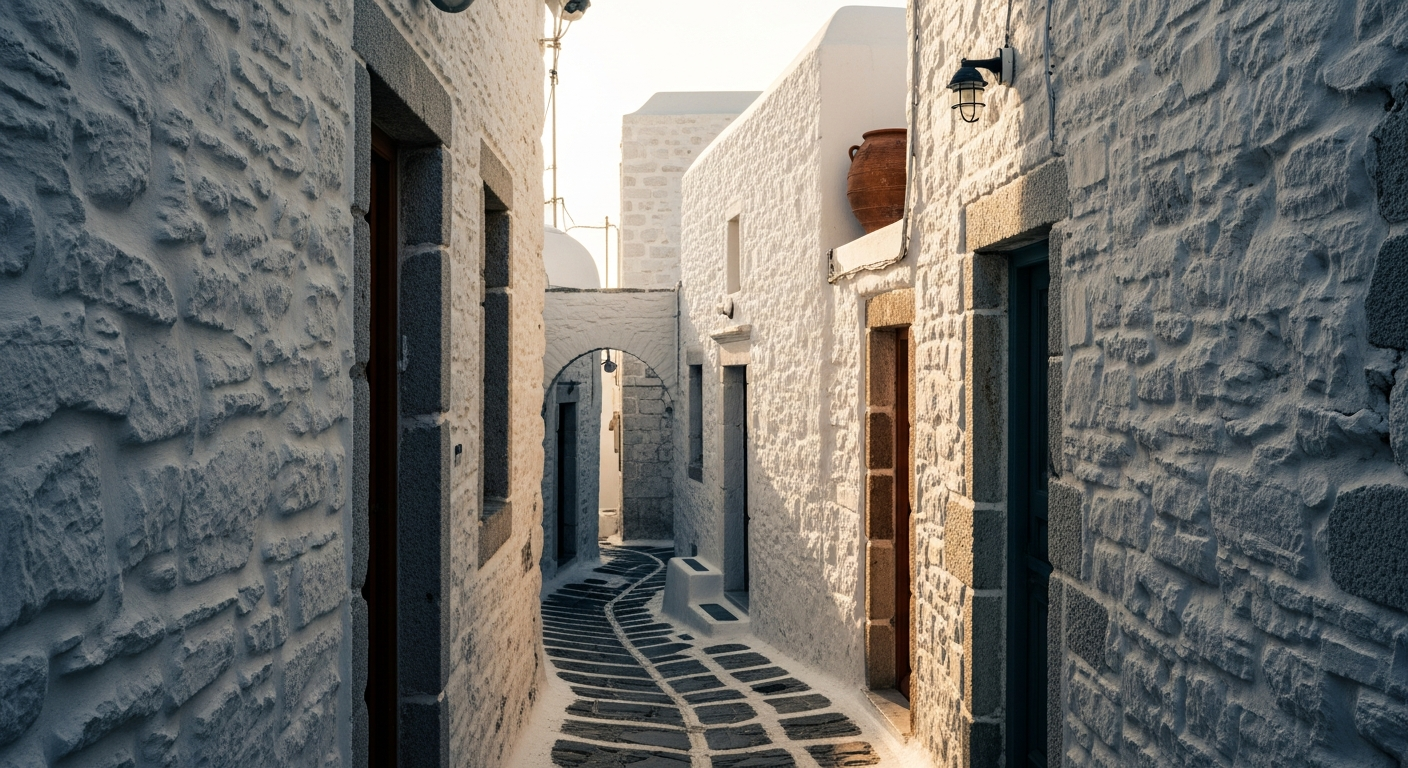
Kastro is the medieval village at the centre of the island's eastern coast, built on a rock spur above the sea with a natural defensive position that meant it served as the island's capital for centuries. The village is still inhabited, the houses pressed together in the medieval configuration, the outer walls of the buildings forming a continuous defensive perimeter. Inside this perimeter the lanes are barely wide enough for two people to pass.
In the morning, before the day gets properly warm, walk through Kastro when the light comes in at low angles through the lane gaps. The stone is pale grey here, different from the blinding white of Santorini, warmer and more textured. The walk up to Kastro from the main road is steep and takes about twenty minutes. Wear flat shoes, something breathable, a hat. The lanes in the tighter sections will not accommodate a bag worn on the side. Shift it to the front.
At the top of the kastro there is a small church and a view over the eastern sea that extends, on a clear morning, to the faint outline of Naxos. The view is unphotographable because it never looks in a photograph the way it looks in person: the depth of the sea colour, the particular angle of morning light on the water, the sensation of height and exposure on a narrow rock above the Aegean.
The Pottery Villages
Sifnos has a ceramic tradition that predates the Tselementes legacy and is equally specific to the island. The clay here has particular properties, and the potters of Vathi and Artemonas have been working it for four thousand years. The traditional Sifnian pot, the tsikali, is used for the slow-cooked chickpea dish revithada: dried chickpeas sealed in the pot with olive oil and onion, left overnight in the residual heat of a wood-fired oven. The result takes twelve hours and requires the specific clay to achieve the right slow exchange of heat.
The pottery workshops in Vathi are open to visitors and most of the potters will show you the process. The village is in a sheltered bay on the south coast, surrounded by olive trees, with the kind of windless stillness that you do not often find on a Cycladic island.
Chrissopigi on the Cliff
The Monastery of Chrissopigi sits on a small peninsula on the south coast connected to the island by a narrow causeway that is sometimes passable on foot and sometimes washed over by the sea. The building is white with the blue trim typical of Cycladic religious architecture, built in the seventeenth century on the site of an earlier chapel. The location, surrounded on three sides by open sea with the Aegean wind coming directly at it, is either sublime or disorienting depending on your relationship to exposure.
The monastery is still active. Dress requirements apply: covered shoulders, covered knees for women entering the chapel. The causeway walk to reach it is short but the stone is salt-weathered and uneven. The swimming at the base of the monastery peninsula is some of the best on the island: crystal water, rocky entry, the dramatic backdrop of the white building above.
Taverna Evenings at Vathi Harbour
The evenings at Vathi are the reason to choose Sifnos over every more famous alternative. The harbour is a crescent of still water with the village on three sides and the open sea at the mouth of the bay. The tables at the water's edge are close enough that the reflected light from the surface plays on the faces of the people sitting there. Okeanida, run by landlady Anastasia, is one of the places where the menu does not exist in the conventional sense. You eat what the kitchen made today. The service is without urgency.
On Sundays, the revithada arrives from the baker's oven where it has been since Saturday evening. The chickpeas have absorbed the olive oil and onion and water over twelve hours in clay and the result has a depth and creaminess that is impossible to replicate with faster methods. Eat it with bread and the local Assyrtiko, mineral and long. You will not want to be anywhere else at this table at this hour.
For evening at Vathi or at the harbour restaurants in Kamares, the register is relaxed but considered. Sifnos attracts visitors who have been to Greece many times and chosen the island that is less convenient to reach and more specifically itself. They dress accordingly: good quality, minimal, nothing performing. A silk dress or linen trousers with a camisole. Flat sandals. If the evening outfit is low-cut or backless, the base layer needs to be as considered as the rest. Medical-grade silicone covers, ultra-thin at the edge, give the dress its intended fall without interrupting the neckline or the back, which matters when the cut of the dress is doing all the work at a candlelit table for three hours.
What to Pack for Sifnos
The island's activities divide cleanly: walking, swimming, eating. The walking requires flat shoes, sun protection, something breathable. The eating, which is the point, requires something that reads right in the candlelit setting of a Cycladic harbour. The pieces that span both are simple: two good dresses, one pair of linen trousers, good flat sandals that work on uneven stone, a lightweight layer for evenings with sea breeze. Nothing more.
For more on building a travel wardrobe that covers active days and evening tables without excess, read the guide to capsule travel packing. Sifnos does not have a dominant image yet. The people who go there go because someone told them to, or because they have been going for twenty years and see no reason to stop. If you accommodate the pace the island sets, there is nowhere in the Cyclades you would rather be.


