
The short answer: nothing built for winter, worn in August. An underwired bra with foam and hook-and-eye closures is built to hide under layers. It was never built for a dress that shows the back and the front both. Ultra-thin silicone covers carry none of that structure. They add no heat, no band, no strap to disappear under a dress packed for real heat. Everything below is the longer answer: what heat strips away, and what is left once the editing is done.
July in Lisbon runs at thirty-five degrees before noon and the light on the Tagus is the colour of old bronze. The city empties to the south coast and to the Alentejo coast and to the islands, and the women who leave carry almost nothing. Two dresses and a layer and something for the evening. The reduction is not austerity. It is the correct response to weather that makes excess clothing not a fashion choice but a physical imposition.
Summer dressing, when the heat is genuine rather than hypothetical, has an editing logic that operates independently of personal style. The Alentejo in August and the Cyclades in July and Ibiza in late June all produce the same wardrobe under different flags. Linen or light cotton. Natural tones. A neckline that does not trap heat. A length that allows movement. The details that remain after the heat has stripped everything unnecessary are the details that actually matter. The woman who looks right in these places in July has done the editing before she packed.
The Foundation Problem in Summer
The conventional foundation garment is a structural object designed for cooler climates and covered necklines. The underwired cup, the bra with its hook-and-eye closure and its foam padding and its straps: this is an object built for a season where it is hidden by layers. In summer, when the dress is the single visible item and the dress is designed to show the back and the front and possibly both, the conventional foundation garment is an object that was never designed for this specific brief.
The compromise is visible. The strap that shows at the shoulder when the neckline is bare. The band that creates a horizontal line where the fabric is thin. The cup that adds a shape the dress was not designed to accommodate. The women who have been dressing for hot summers in hot cities for twenty years have solved this. They did not solve it with a conventional bra. They solved it with the absence of one, or with the smallest and least-visible alternative available.
The heat itself changes the physics. At thirty-five degrees, adhesion that would hold in a London autumn is working at a different point on its performance curve. The materials that hold through Mediterranean summer heat are medical-grade silicone, not the acrylic or foam that cheaper alternatives use. The medical-grade silicone that comes out of Korean manufacturing under Korean medical-grade standards holds through a full day of heat. Ultra-thin at the edge, less than half a millimetre, so the neckline remains exactly what the designer cut it to be. This is not the product that compromise requires. It is the product that eliminates the compromise entirely.
The Summer Dress as Complete Object
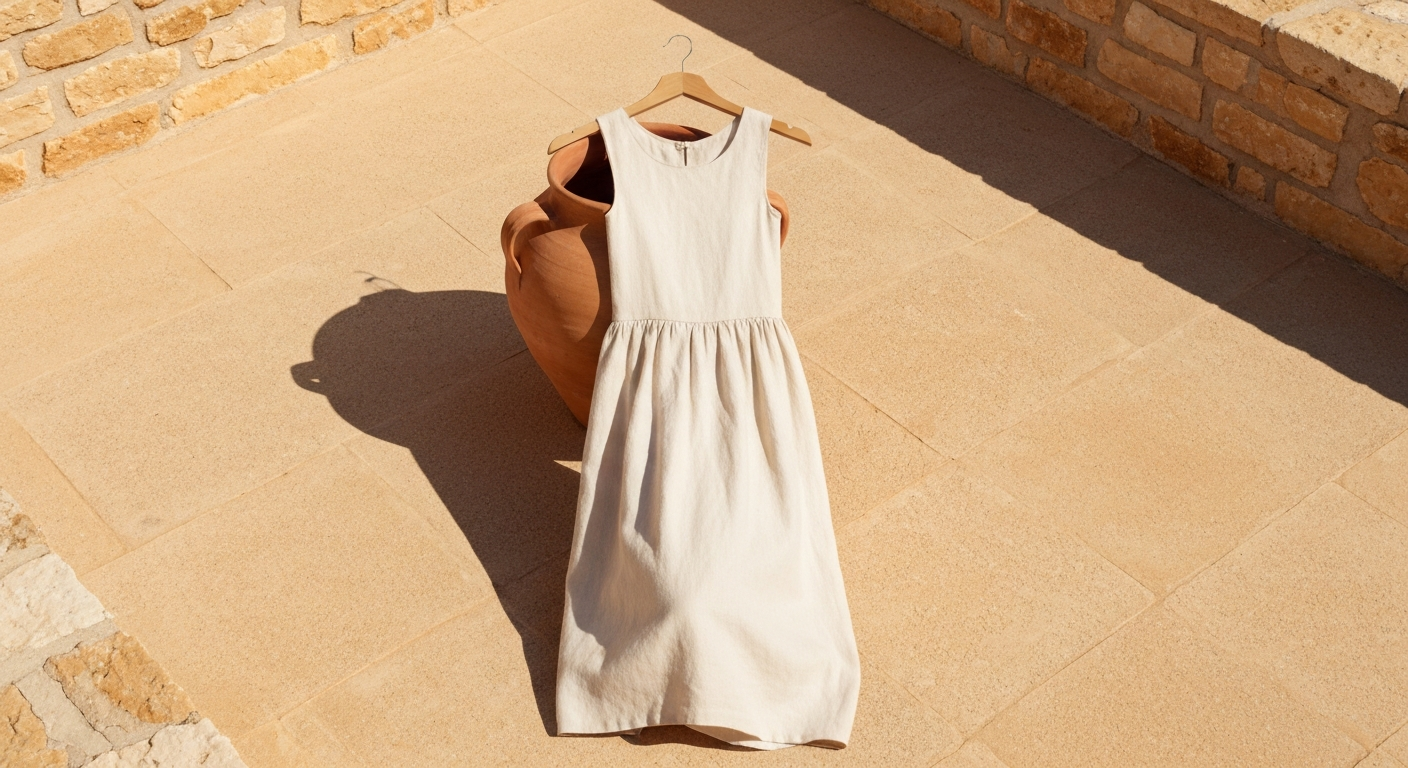
The designer who makes a summer dress is not making a garment that requires management. The slip dress in bias-cut silk, the strapless sundress in heavy cotton, the open-back maxi in crinkled linen: these are complete objects. They do not have missing pieces. They are designed to be worn without the support infrastructure that autumn and winter garments accommodate. When a conventional foundation garment is added to them, it is not completing the design. It is in conflict with it.
Isabel Marant's summer collections for the last decade have been exercises in this logic. The necklines drop low. The backs open. The straps are thin and positioned specifically. These garments are designed for bodies that have made their arrangements privately, before the dress was put on. The arrangements that work are invisible ones. The arrangements that are visible are garments in conflict with their dress.
Medical-grade silicone covers are the arrangement that summer dresses were designed to accommodate. They are not a workaround. They are the correct answer to the question the dress is asking. The covers that make a summer dress work completely are the object that closes the distance between what the designer made and what the woman who wears it needs.
The Editing That Summer Demands
The summer wardrobe that works is small and specific. Two or three dresses that you would wear again and again without regret. Flat sandals. A linen layer for evenings. The foundation question answered once and applied universally. The woman who packs four dresses and one answer to the foundation problem has more freedom on every day of the holiday than the woman who packs eight dresses and a different foundation problem for each one.
The Alentejo in August is an hour and a half from Lisbon by car and about twenty degrees hotter. The village of Monsaraz sits on a hill above the Alqueva reservoir, the largest artificial lake in Western Europe, and the views from its medieval walls extend across a wheat-coloured landscape to the Spanish border. The evenings here are warm enough to eat outside at ten with no layer. The dress for a dinner at Herdade do Esporao, the wine estate in the plains below, is the same dress that wore well all day. The foundation that supported the dress is invisible and was put on that morning and requires nothing further. The evening is uncomplicated by logistics. That is what summer dressing without compromise produces.
The Logic of Fewer Choices
The woman who carries one answer to the foundation question rather than several also carries less cognitive load through a summer. She knows what goes under every dress before she opens the wardrobe. She does not solve the problem fresh each morning. She solved it before the season started and the mornings are now free for the actual summer.
This is the claim for the invisible solution stated plainly, without the language of luxury or aspiration: fewer choices, better outcome. The dress works. The day works. The evening works. July in Lisbon or August in the Alentejo or September in the Cyclades is fully available. The clothes are doing their job and requiring nothing in return. That is the correct use of clothing in summer. Nothing more is needed. Nothing less will do.
For the specific guide to backless and low-cut necklines and what they require, the article on what to wear under a backless dress covers the range. The summer months are when the question arrives daily. Answering it once, in advance, is the only version of summer dressing that does not ask for compromise.
The summer dress that works is not a complicated object. It is a simple one that has been prepared for. The fabric moves. The neckline sits. The back does what the back was designed to do. The woman wearing it does not reach behind her at dinner. She does not pull at a strap. She does not think about the dress at all, because the dress is doing its work without requiring anything in return. That is the correct use of a summer garment: it serves the summer, and the summer is the point.
The Tagus turns orange at sunset and the ferries run from Cais do Sodre to Cacilhas every fifteen minutes and the line for the number 28 tram is still long at seven in the evening and the city has been at thirty-five degrees since ten in the morning. The right dress for this city in this season asks only one thing of the person wearing it: that the foundation question was answered before July.
The covers. Designed to disappear under everything.

Matte and invisible under sheer.
€29,90€5,98 a pair
Korean silicone · 15+ wears per pair
“I carry them with me everywhere.”
Carol M.

