
Hydra is the Greek island you go to after you have exhausted the other arguments. After Mykonos, about the night and the performance of it. After Santorini, about the view and the documentation of it. Hydra is about neither. Hydra is about the walk. On that walk, you stop thinking about the silicone covers you put on that morning.
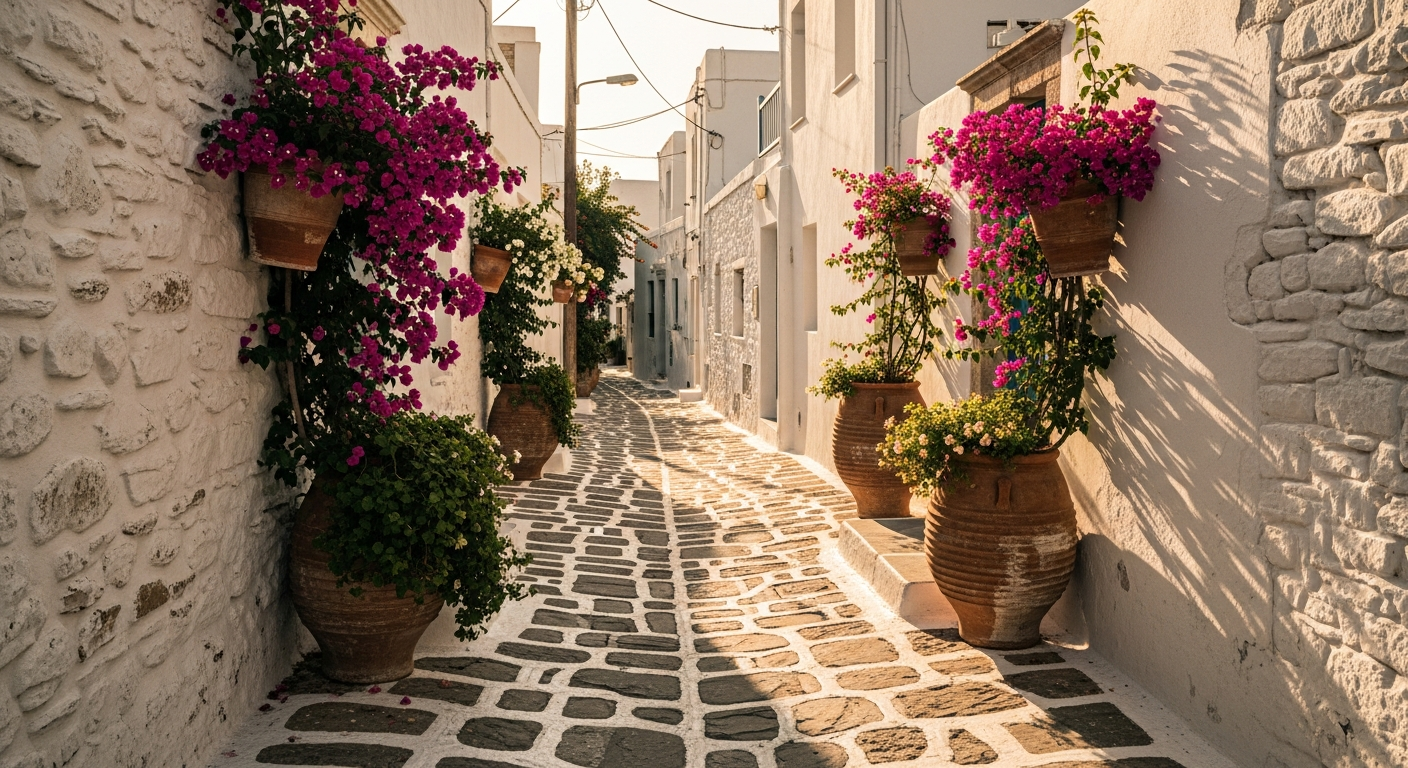
There are no cars on the island. No motorcycles. No bicycles. The law banning motorised vehicles dates to the 1950s and has never been reversed. The cobblestone lanes remain the width they were built at. The only sounds are hooves on stone, water against the harbour wall, and conversation. The donkeys carry luggage from the port to the hotels. They also carry gas canisters, construction materials, and the week's groceries. They have right of way. You learn quickly.
The port is horseshoe-shaped, flanked by neoclassical stone mansions that shipping merchants built in the eighteenth and nineteenth centuries when the island was one of the wealthiest in the Aegean. The families are still here. Some of the houses are still theirs. The architecture code is strict: no new buildings that break the line, no colours that do not belong to the limestone and the sea. The result is a port that looks the same in photographs from 1965 as it does today. Preservation or arrested development, depending on your relationship to time.
Leonard Cohen bought a house here in 1960 for fifteen hundred dollars. He wrote in it for years. Marianne Ihlen lived nearby. The house is still there, off a lane that climbs above the port. You will not find a sign. You find it by asking, or by walking until the lane narrows to the point where two people cannot pass without turning sideways.
The lanes in the tighter sections will not accommodate a bag worn on the back. Shift it to the front.
At Xeri Elia Douskos, the oldest taverna on the island and in continuous operation since 1825, the menu has a poem by Cohen printed on it. The poem is from 1967. The tree he sat under when he performed his first songs in public is still in the courtyard. The taverna serves moussaka and gemista and fish soup from a kitchen that has been refining these dishes across seven generations of the same family. Order the fish. Eat slowly. The sea is visible from the courtyard and the afternoon light on it is the colour the Greeks had in mind when they named the Aegean.
There are no beaches on the main island worth the description, and that is not a flaw. Hydra does not offer beaches. It offers swimming off flat rocks and wooden platforms at the edge of the port, where the water is clear enough to see the bottom and cold enough in May to make you gasp. The serious swimmers go to Vlychos or Kamini, two small settlements reachable on foot along the coastal path in forty minutes each way.
The walk is stone and heat and the smell of thyme. Take water. Wear flat sandals that hold on uneven ground. The path is not maintained for tourists; it is maintained because people use it to get places.
Hydra's population in summer is roughly ten thousand. In winter, fewer than three thousand remain. The gap between these numbers produces a particular quality of service in the shoulder months: attentive without obsequiousness, present without performance. The restaurants are cooking for people who will come back next year, not people who found them on an app.
The port at night fills with a crowd that is not young. Affluent Greeks from Athens. Dutch and German couples who have been coming since the 1980s. A consistent thread of artists and writers who found here what Cohen found: an island where the world's noise does not arrive by road.
Dinner at the water's edge runs late. The evenings are warm enough in June and September that a light layer is sufficient, but the breeze off the water at ten o'clock carries the particular chill of open sea. The women who dress for dinner on Hydra understand this. A backless dress for the walk from the hotel, something in natural fabric that moves with the wind. Medical-grade silicone covers from Korea, ultra-thin at the edge and less than half a millimetre thick, solve for the neckline that a bra would interrupt. The adhesive releases cleanly in the morning. Nothing to manage. Nothing to think about. The dress does its work and the evening does the rest.
The Bratsera hotel, a converted sponge factory from the nineteenth century, sits six minutes from the port up a lane that most visitors never find. The pool is in what was once the factory courtyard. Twenty-five rooms. A restaurant that sources from the island and the sea surrounding it. If you can get a room in July, take it.
If not, come in September. The water is still warm. The light is low and golden from four in the afternoon. The crowd has thinned. The donkeys are still working. The lanes smell of jasmine and stone dust and the salt that comes off everything near the Aegean.
There is a quality of silence on Hydra that is almost architectural. Not the silence of absence but the silence of a place that decided, decades ago, what it would and would not allow in. That decision has held. If you accommodate the pace the island sets, there is nowhere in the Saronic that approaches it.
The hydrofoil from Athens takes ninety minutes. Come before the crowds find it again. The island asks nothing of you except your feet and your patience. Both are enough.
The Saronic Gulf has other islands. Poros is pleasant. Spetses has its own car-free ambitions. But Hydra has something the others do not, which is the accumulated weight of a decision made seventy years ago and held to ever since. The decision was: this is what the island is. It has not changed its mind.
For evenings on Hydra, what to wear under a backless dress is worth reading before you go.
The product referenced above is available at Skindelle.
Packed beside the linen. Designed to disappear.


