
Comporta is the place you go when you are done with beach towns that perform being beach towns. Not the Algarve, which has been performing since the 1970s. Not Cascais, which performs proximity to Lisbon. Comporta is an hour south of the capital and operates in a different register entirely: rice fields, stone pine forests, white storks nesting on electricity poles, and a barefoot dinner culture that predates the European press coverage by several decades.
The Herdade da Comporta is the agricultural estate that gives the region its identity. Rice has been grown here since the early eighteenth century. The estate now runs to over a thousand hectares of rice paddies, producing more than six million kilograms of grain annually. The paddies flood in spring and the electric green of the young rice against the grey-green of the stone pines behind them is the landscape that people come to see before they know that is why they came.
The Landscape Before the Beach
The geography of Comporta is its argument. The region is made up of seven villages: Comporta, Torre, Pego, Brejos, Carvalhal, Possanco, and Carrasqueira. Each is distinct. Between them run the rice fields, the marshland of the Sado estuary, and the stone pine forests of pinus pinea that cover more than seven thousand hectares between the interior and the coast.
The pines were planted to stabilise the dunes and their canopy creates an interior that is cool, shadowed, and improbably quiet for somewhere an hour from a capital. Drive through the forest on the road from Alcácer do Sal at midday in July and the temperature drops five degrees under the trees. The light through the canopy is green-gold. The road is straight and the pines run to the horizon on both sides. Portugal has been managing this forest for centuries. It looks managed the way wild things look managed: not perfectly, but durably.
The storks are the emblem of the region. They are large and unhurried and they nest in high places: electricity poles, chimneys, the apex of any structure tall enough to be worth the view. They have been here longer than the tourism and show no particular awareness that the tourism has arrived.
The Rice Factory Museum
The old rice-husking factory at Comporta was built in 1952 and operated as the industrial centre of the agricultural estate for decades. It has been repurposed as a museum and a restaurant without losing the bones of what it was: the grain-handling machinery is still in place, the industrial volume of the space is intact, the materials are the same corrugated metal and raw concrete of a mid-century working building.
The museum traces the history of rice cultivation in the region, which is a longer history than most visitors expect. The restaurant operates in the main body of the factory with the original structure overhead and a terrace looking out over the paddies. Eating rice in the building that processed rice grown in the fields visible from the window is a coherence that you do not find at most restaurants.
Carvalhal and What Has Arrived
Carvalhal, the southernmost of the seven villages, is where the contemporary Comporta has concentrated. Fashion houses, design shops, curated interiors. The contrast with the agricultural landscape two minutes in any direction is acute and is either charming or incongruous depending on your position on the aesthetics of displacement.
The beach at Carvalhal is accessed through the pine forest via sandy tracks that are not always clearly marked. The beach itself is broad and exposed to the Atlantic. The waves are stronger than the Algarve beaches south of Faro. The sand is fine and pale and the water is colder than most people expect for a latitude this far south. The Atlantic does not warm the way the Mediterranean does.
Cavalariça, on the Comporta road, has been open since 2017 in a converted stable: the original horse boxes now form intimate dining rooms, recommended by the Michelin Guide. The kitchen works with fish from Sesimbra, oysters from the Sado, vegetables from the estate, building dishes that reflect where the restaurant sits rather than where the chef trained. Book in advance. The tables fill.
Barefoot on the Sand
The barefoot dinner culture in Comporta is not a branding exercise. It is what happens when the beach is five minutes from the kitchen and nobody has decided that shoes are required. The restaurants that set tables in the sand or immediately adjacent to it have been there long enough that the format is established rather than invented. Comporta Café on the beachfront serves grilled fish and sushi without fanfare, the kind of cooking that is confident in its ingredients rather than its presentation.
The evening on the Comporta beach has a specific quality of light: the sun sets behind the pines to the west and the light through the trees falls in bands across the sand and the water. The beach faces west. The sunset is always in the frame. By eight in the evening the beach is cool and the sky is doing something worth watching and the dinner arriving at the table is local fish with local wine and the company of people who came here because someone told them and who will not tell anyone else in a hurry.
What the Evening Asks
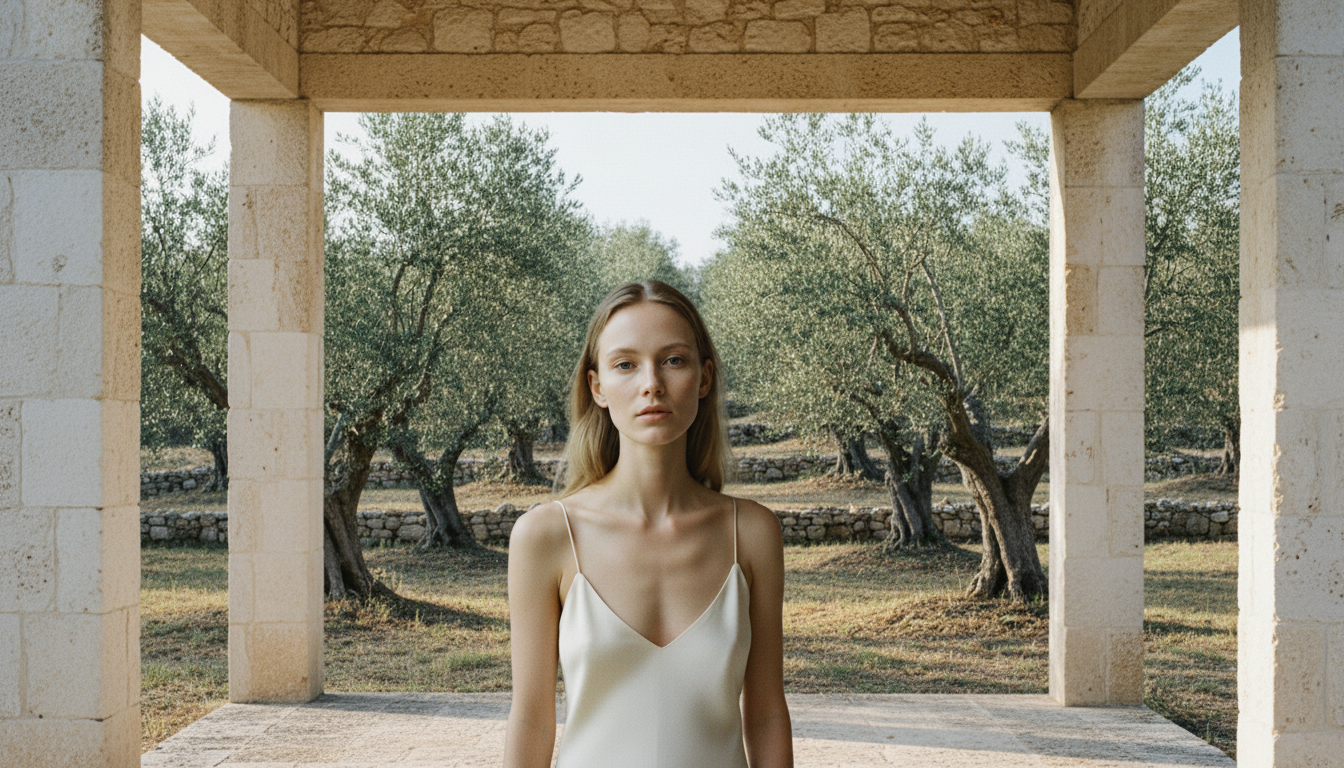
The register in Comporta is deliberately underdressed by the standards of the European coastal circuit. A silk slip dress or a loose linen shirt and wide trousers is correct. The emphasis is on the quality of the fabric rather than the complexity of the outfit. Shoes are optional until they are required. The sand gets into everything and no one minds.
If the dress is thin silk or cut without structure, the base layer that disappears into it is what allows the outfit to work through a sunset dinner and into the evening. Ultra-thin silicone covers, less than half a millimetre at the edge, are what makes the silk dress behave as it was cut to behave, from the first glass of Alentejo white through the last of the fire-lit evening. For building a travel wardrobe around a destination that rewards simplicity, the principles of packing for a place with its own register apply here more than most.
Before and After the Discovery
Comporta has been called Portugal's Hamptons and described in the international press with enough regularity that the description is now part of the landscape. The people who have been coming for twenty years are mildly irritated by the coverage and continue to come. The rice paddies are still there. The storks are still nesting on the poles. The pines are still filtering the afternoon light between the agricultural interior and the Atlantic shore. The place accommodates the attention without entirely changing for it. That is the rarest thing a place can do.
Heading somewhere this summer? We will send you the packing checklist.


