
Most adhesive irritation happens at removal, not during wear. The right material releases cleanly without effort. The right technique takes thirty seconds longer than the alternative and prevents the kind of cumulative skin damage that gets mistaken for a new sensitivity.
The short answer: never peel fast, and never peel warm skin. Irritation happens at removal, not during wear, because a quick pull tears the skin's outer layer instead of releasing it. Medical-grade silicone covers lift away clean because the adhesive does not strengthen with body heat the way cheap tape-style adhesive does. Warm the area first, then lift slowly from one edge, and the skin underneath stays exactly as it was. Everything below is the longer answer: why the adhesive type changes everything, and the correct removal sequence.
Irritation from adhesive products almost never occurs during wear. It occurs at removal. The same principle applies whether you are removing a cover after an evening in a backless dress or after a full day in a garment with an open back.
The mechanism is mechanical before it is chemical. When adhesive separates too quickly, the force tears the outer layer of skin rather than releasing it cleanly. The adhesive lifts and takes skin with it. The result is a micro-tear: invisible immediately after removal, sometimes painful, and under repeated application and removal over weeks and months, cumulatively significant. The same spot, stripped repeatedly, becomes more sensitive each time. Eventually it looks like an allergy. It is not. It is damage.
Why the adhesive type changes everything
Cheap adhesive covers and medical-grade covers behave differently at removal because they bond differently during wear.
Cheap covers use an adhesive similar to what is used in stickers and packaging tape. It provides a strong initial bond, which is why it feels secure at first. The problem is that this type of adhesive increases in strength with body heat. After several hours of wear at body temperature, the bond is stronger than it was at application. Removing a warm cover with this kind of adhesive requires real force. That force is what causes the redness and raw patches that wearers attribute to sensitivity. It is not sensitivity. It is the predictable result of the wrong material.
Medical-grade covers use an adhesive that conforms to the skin surface without forming a deepening bond. It does not get stronger with heat or over time. At removal, it simply lifts away because there is nothing to overcome. The force required is minimal. The outer layer of your skin stays where it belongs.
This distinction is the reason wound care specialists consistently specify medical-grade adhesive products for patients with fragile or sensitive skin. The adhesive chemistry is the single most controllable factor in whether removal causes damage. Everything else, technique, timing, skin preparation, is secondary to what the product is actually made of.
Technique for medical-grade covers
Even the gentlest adhesive benefits from correct technique. The principle is simple: stretch the skin rather than peel the product. Holding the skin taut at the leading edge of the removal zone transfers the mechanical stress from the skin surface to the adhesive bond, where it belongs.
Begin at one edge. With one hand, hold the skin just ahead of where the cover ends. With the other hand, fold back the cover on itself and ease it away from the skin at a low angle, as close to parallel with the skin surface as the geometry allows. Work slowly and continuously rather than in a single pull. Medical-grade covers release in a smooth peel when the angle is low and the skin is held taut.
Warmth makes any removal easier. A warm shower or bath raises skin temperature and softens the adhesive interface, reducing the force required. For medical-grade covers, this effect is mild because the adhesion is already gentle. It is most useful when the cover has been worn for many hours or in heat.
When to use oil
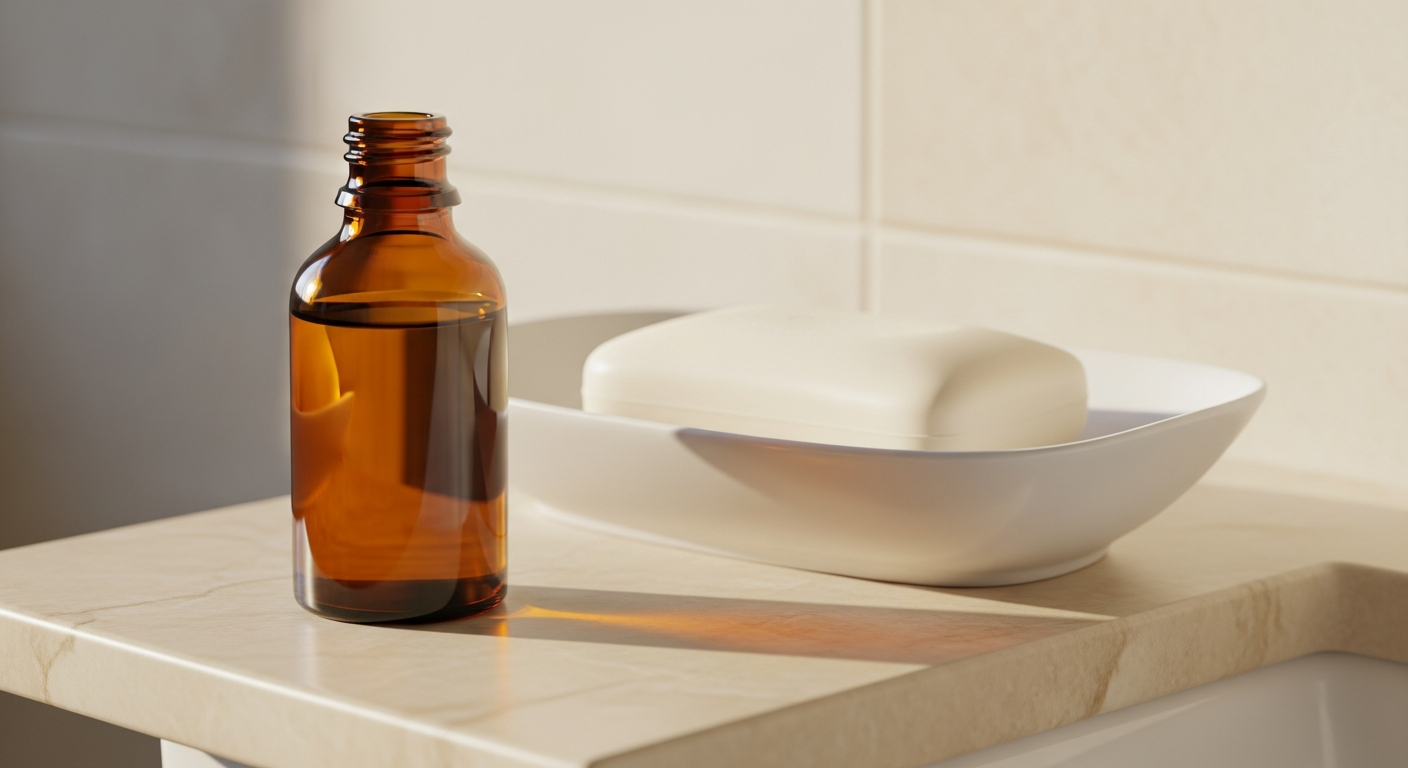
Oil-based products work reliably for adhesive removal: baby oil, coconut oil, jojoba oil. For medical-grade covers, oil is rarely needed because the adhesive releases without mechanical difficulty on clean, dry skin. Where it is useful is when a moisturiser was present on the skin at application and the adhesive bonded unevenly. A few drops at the edge, allowed a moment to work, manages those zones without force.
What not to do
The fastest removal method, ripping the cover away in a single motion, causes the most damage regardless of adhesive type. The force required to separate a bonded surface in one fast pull is many times higher than the force required in a slow, low-angle peel. The skin surface experiences this as an acute mechanical event. The result is visible redness and, on repeated exposure, changes in skin texture and sensitivity at the application site.
Rubbing alcohol dissolves most adhesive residues but strips the skin's natural moisture layer. For any adhesive residue that does not respond to oil, a dedicated medical adhesive remover is the right tool. These products dissolve adhesive without disrupting the skin's protective barrier.
Never reapply to skin that is still red or tender. The barrier is open. It needs time, not another product. Full recovery takes one to three days. A product that causes no response on intact skin may cause a significant response on compromised skin, which is why irritation that appears to develop over successive uses is often cumulative damage rather than a new sensitivity.
After removal
After removing any adhesive product, apply a fragrance-free moisturiser within a few minutes. Removal temporarily disrupts the skin surface even under ideal conditions. The moisturiser maintains barrier function and minimises the dryness that follows adhesive contact.
For frequent wearers, the state of the skin between uses matters more than any single removal technique. Skin that is well-hydrated and intact tolerates application and removal with minimal response. Start with the product, then the technique. In that order.
Related: How they hold up. Clean removal is part of how a pair lasts.
You've read about them. Now see them.

Matte and invisible under sheer.
€29,90€5,98 a pair
Korean silicone · 15+ wears per pair
“I carry them with me everywhere.”
Carol M.

