
The Island That Understood What Stone Is For
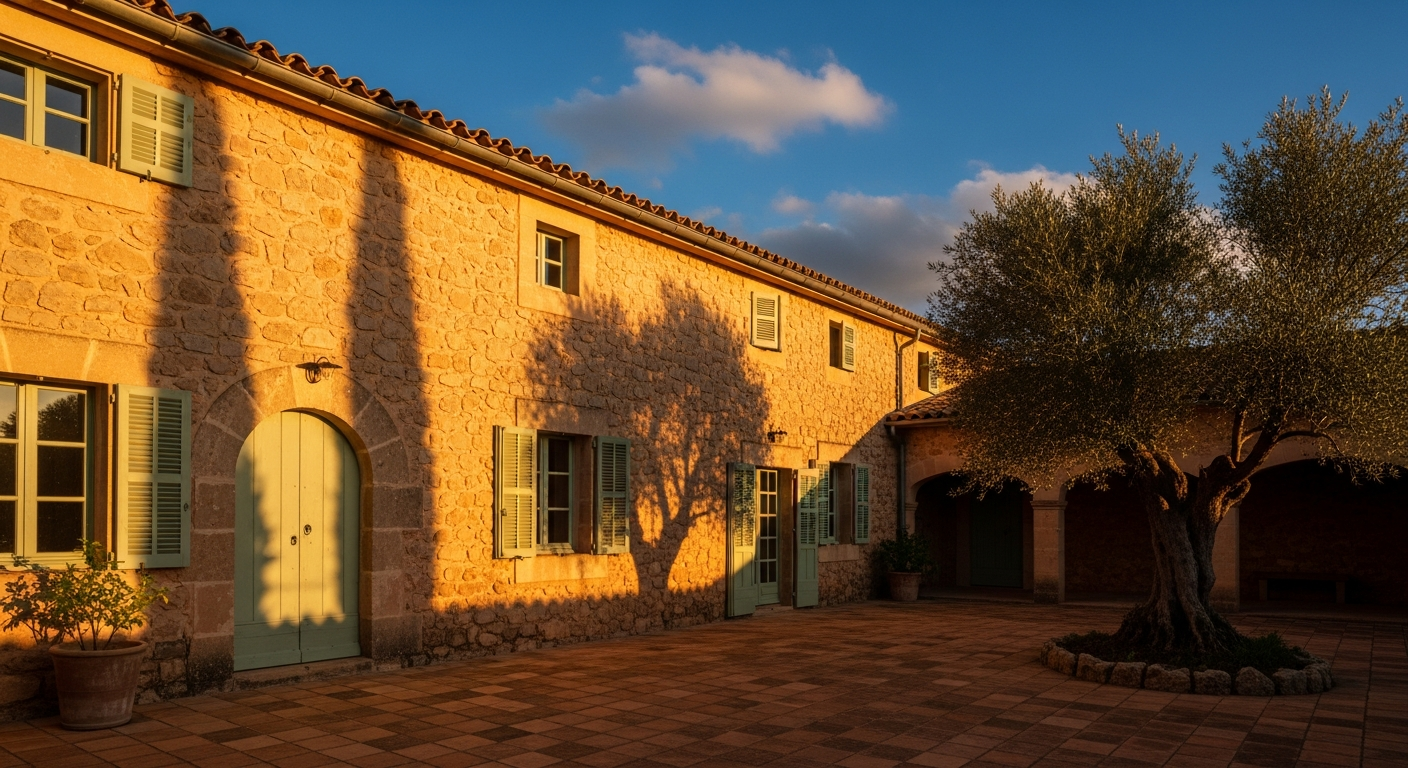
Mallorca is not the island you choose after Ibiza. It is the island you choose instead of Ibiza, once you have understood what you are actually looking for. The Tramuntana mountains running along the northwest coast, a UNESCO World Heritage site since 2011, drop into the Mediterranean through villages built from the same honey-coloured limestone that makes up the terraced walls, the old watermills, the manor houses with their deep-set windows and pale green shutters. The architecture is not rustic in the holiday sense. It is the result of centuries of people building carefully with the materials they had, which happened to be very good materials. That same instinct chooses a set of silicone covers for what goes on underneath, nothing more elaborate needed.
In summer, the island operates on two registers. The finca wedding in the interior. The long evening in Palma when the heat finally breaks after nine.
The Finca Wedding
A finca is a country estate. In Mallorca, the significant ones are old: 13th-century stone foundations, 17th-century manor houses, olive groves that have been producing oil on the same hillside for four hundred years. The weddings held in these properties are not rustic in any soft sense. They are formal events conducted in settings that happen to have been standing since before the concept of the destination wedding existed.
Finca Son Berga, near the mountain town of Alaró, was built in the 17th century. Its stone terraces overlook the Tramuntana range to the north. Finca Son Togores, outside Esporles, sits ten minutes from Palma with a stone manor and ceremonial terraces that accommodate two hundred and fifty guests. Finca Morneta, in the geographic centre of the island, dates to the 13th century and has both indoor and outdoor capabilities for three hundred.
The template for this kind of event was set, in part, by Belmond La Residencia in Deià. Two 16th and 17th-century manor houses joined on a terraced hillside above the village, honey-coloured stone walls and original beams, olive groves being restored on the property. It opened in 1984 as the first hotel of its kind on the island. The Deià model, which combined the old Mallorcan estate with serious hospitality, became the reference for everything that came after.
What Finca Weddings Require
The logistics of a finca ceremony in July or August are thermal first. The outdoor ceremony in the afternoon is conducted in thirty-plus degrees on stone terraces that radiate heat. Dinner begins around nine, when the temperature has dropped to something bearable. The dancing continues until two or three in the morning, often with the sound of the wind coming down from the Tramuntana.
The dress that works across all three acts: the ceremony, the dinner, the dancing, is not the dress that looks best in photographs at noon. It is the dress that is still correct at midnight, on a stone terrace that has been warm all day, with sea air arriving after ten. The construction has to be structural enough to survive the evening without architecture underneath it. What works, for a dress with a bare back or a clean neckline at a finca dinner in August, is medical-grade silicone covers from Korea. Good for fifteen or more wears. The adhesive releases cleanly. They hold through the ceremony heat and the dancing and the midnight swim that sometimes closes these evenings.
For guests and brides navigating this specific occasion, see the guide to invisible lingerie on a wedding day and the ultra-thin silicone covers that perform in exactly this context.
Palma in the Evening
Palma de Mallorca is a city that takes its evenings seriously. The old city, built on the Gothic grid with the 14th-century Cathedral of Santa Maria, known locally as La Seu, rising from the waterfront, belongs to the morning. The limestone of La Seu is a different quality in the hours before ten: pale gold in early light, the flying buttresses making the kind of shadow that changes every thirty minutes.
By seven in the evening, the old city is navigable again after the afternoon heat. The narrow streets of La Lonja, the medieval merchants' quarter below the cathedral, come alive from eight onward. The rooftop bars and terrace restaurants that have changed Palma's culinary identity over the past decade are concentrated here and in the Born district: Nakar Hotel's rooftop bar with the cathedral in direct sightline, Fornet de la Soca for the kind of Mallorcan pastry you eat standing up at ten in the morning, Quina Creu for the evening version of the same island logic.
The Palma rooftop evening, which begins with a drink at eight and becomes dinner at ten because nothing important starts before ten in summer, is conducted in a specific wardrobe: light, clean, nothing that struggles in the heat, everything that looks better when slightly dishevelled by a sea breeze. Linen. Silk. Nothing synthetic. Nothing that retains the day's warmth.
The Coast Beyond Palma
The road northwest from Palma toward Deià is the most dramatic road on the island. It climbs through the Tramuntana, through the village of Valldemossa where Chopin spent the winter of 1838 composing the Raindrop Prelude in a monastery cell, and drops into Deià, a village of perhaps three hundred residents in winter, ten times that in summer, gathered on a hillside above a small cove. Robert Graves lived here from 1929 until his death in 1985. The particular quality of the light in Deià, which comes from the sea on three sides and the mountains behind, attracted and kept him. It still attracts people for the same reason.
The cove at Deià, Cala Deià, is reached by a fifteen-minute walk down a path through olive trees. There is a single restaurant at the water. You swim off the rocks. You eat grilled fish at a table close enough to the water that the reflected light moves across the faces of the people sitting there. Nothing about this scene has changed in forty years.
The Version of Mallorca Worth Choosing
Mallorca has four million visitors in summer. Most of them are in Magaluf or Alcudia or the hotel strips along the south coast. The island they are on is not the island being described here. These are two different places that share a geography. The Tramuntana coast, the old fincas, the Palma evenings that run until two, the stone villages where the architecture is the point: this is the island that rewards the person who did the research.
The finca wedding is the reason many people come here for the first time. The Palma evening is the reason they return without an occasion. Both are worth doing in the same trip. The island is small enough that the drive from Deià to a Palma rooftop is forty-five minutes. In summer, you have the time.
The covers. Designed to disappear under everything.


