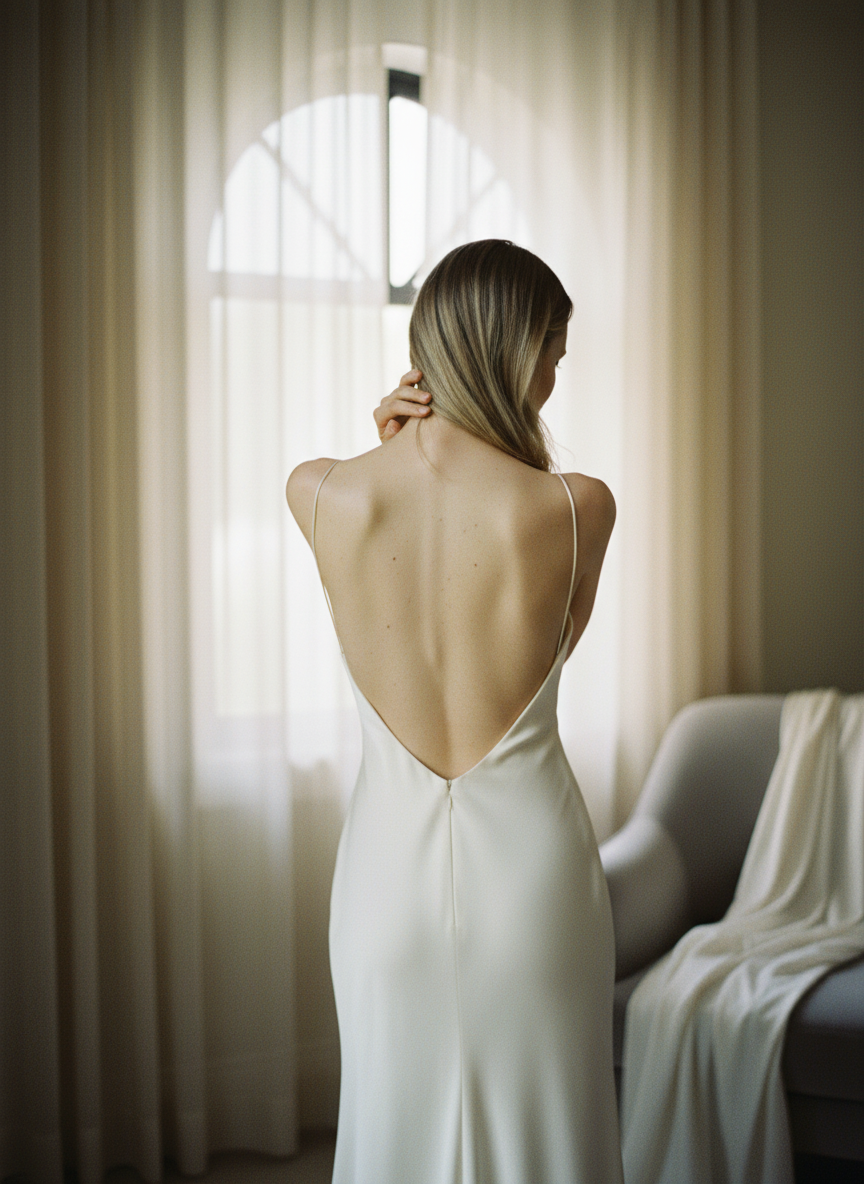
A ceremony on the Atlantic dune coast at four in the afternoon in September: the sand is still warm from the morning, the breeze off the water is steady, the photographer is shooting burst mode from a low angle because the light is correct and will not stay correct for long. The dress is light and fluid. What is underneath it is not a fashion question. It is a physics question.
Physics questions have answers.
Wind as a Variable
Outdoor photographers understand wind. An experienced photographer at a coastal venue spends the first few minutes of any session learning the direction and rhythm of the breeze before directing anyone into the frame. Moving fabric in good light produces images that controlled indoor photography cannot approach. The photographs that come back from a well-shot outdoor wedding are often the best the couple will ever have.
The problem is not wind in the photographs. The problem is the exposed moment between frames, when the fabric moves in a direction the wearer did not expect and the foundation choice becomes visible as a management failure rather than a design element.
A strapless foundation under a flowing dress shifts when the dress shifts. The two surfaces move independently, and the gap or edge becomes visible at the neckline. This is the specific failure mode that an outdoor ceremony creates and that fittings in a still interior never reveal.
What the Fabric Does in the Wind
Lighter, more fluid fabrics are the most responsive to breeze. They fill with air and lift, which is the property that makes them beautiful on a cliff above the ocean and the same property that makes foundation management critical. A bias-cut dress in a light silk becomes a second skin when the wind presses it, which is the desired effect when everything underneath is resolved and an unwanted effect when it is not.
Heavier, more structured fabrics resist wind without assisting it. A bride in a clean-cut column dress at an inland venue, where the wind is drier and more variable, is wearing a different garment with different requirements. The heavier dress in wind reads like a sculpture. The lighter dress reads like water. Both are correct. Both require different thinking about what works underneath.
Sand, Stone, and the Terrain Problem
Coastal venues share a terrain problem that indoor photography does not generate. Sand moves underfoot. Any real heel sinks into dry sand and becomes a walking problem. The option that produces better photographs is the one that was planned rather than improvised. Arriving at any soft-ground venue twenty minutes early to walk the route once, identify where the terrain changes, and adjust accordingly: this is preparation that pays back during the shoot.
Stone terrace venues, common in historic centres and manor houses inland, present a different problem. The stone is uneven, often worn smooth by centuries of use, and requires a flat or low heel with a sole that grips. Flat soles at an old-city venue are not a style concession. They are a practical position. Both terrain types reward the same logic: walk the path before the guests arrive. Five minutes of reconnaissance resolves the terrain variable completely.
Photography and the Foundation Decision
A photographer shooting in direct afternoon light at a coastal venue is working in technically demanding conditions. The reflected light from sand or water acts as a fill that eliminates most natural shadow. An experienced photographer compensates. A less experienced one produces images where the dress blends into the background, and any visible foundation edge becomes the most defined element in the frame.
The camera at low angle captures what the eye does not process in real time. The edge of a foundation band, invisible to guests ten metres away, is registered at one-two-hundredth of a second and present in every photograph from that position. This is not a problem solved in editing. It is solved before the ceremony by choosing a foundation that has no edge to register.
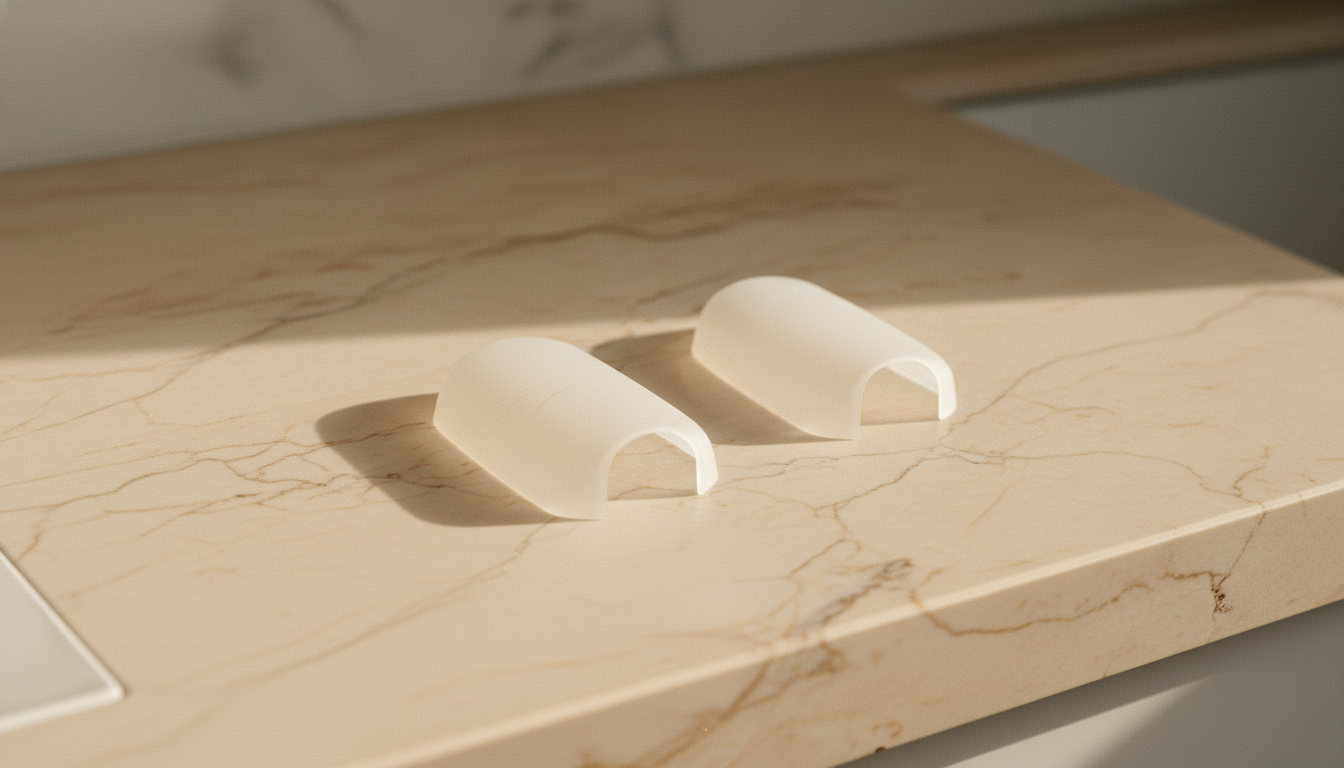
Medical-grade silicone covers, ultra-thin at the edge, are below the threshold that light registers as a line. They are not barely visible. They are not visible. The backless and strapless neckline problem is solved at the level of the material, not through positioning or post-production.
The Duration Problem
An outdoor coastal wedding runs longer than the invitation suggests. The ceremony is under an hour. The drinks photographs are ninety minutes. The dinner begins at sunset and runs past midnight. The dancing begins when the dinner ends. Total time from arrival to the last photograph: fourteen hours, most of it outdoors in conditions that shift from warm afternoon to cool evening to cold after midnight when the wind turns.
Any foundation solution that requires adjustment during the day fails this test. A strapless bra that has shifted by hour four becomes the wearer's occupation for the remaining ten hours. A pressure-sensitive silicone adhesive, reinforced by body warmth, improves over the first hours of wear and holds consistently through the temperature change of a coastal evening. The Bridal Kit is built for this duration.
The Wind in the Photographs
The light at four in the afternoon on the Atlantic coast, the shadow on warm stone when the sun is still high, the way light fabric reads against blue water and a moving sky: these are conditions that cannot be replicated in a studio or manufactured in post-production.
The wind is in most of the photographs. The dress is moving in most of them. The woman in those images is not managing anything. She is present in the setting, wearing the dress correctly for the full duration, with nothing underneath requiring adjustment and nothing visible that was meant to be invisible.
The physics question had an answer. The foundation held. The wind was a collaborator, not a variable to manage.
The checklist for the morning of. One email, everything you need underneath the dress.