
The short answer: whatever protects the adhesive surface between wears. An open drawer does the opposite: dust, lint and skin oil land on exactly the face that has to grip skin again later. A week there weakens a pair, and you can feel it. Six months does more. Ultra-thin silicone covers keep their hold when that surface stays covered and clean between events, not when it sits exposed. Everything below is the longer answer: what actually degrades in storage, and how long a protected pair lasts.
The covers are in a drawer somewhere. This is often where the problem begins.
You wore them to a wedding in June. They held perfectly for seven hours. You came home, peeled them off, rinsed them, set them on the bathroom shelf to dry, and then — somewhere between the post-event tiredness and the rest of summer — they ended up in a drawer. Open. Adhesive-side up. Next to a cotton pad and a forgotten lip balm.
Six months later, you pull them out for a December party and the grip that held through a dancing ceremony is gone. The covers feel the same between your fingers. Against your skin, they are noticeably weaker. The drawer was the problem — not the product, and not your skin.
What actually degrades during storage
Medical-grade silicone is chemically stable across a wide range of conditions. The silicone itself does not break down from humidity, light, or typical household temperature variation. What does degrade is the adhesive surface — the shallow layer of the silicone that is in contact with its environment during storage. This surface is the entire mechanism of the product. Everything that compromises it during storage shows up as reduced hold during wear.
The degradation is rarely dramatic. It happens incrementally, in ways that are not obvious until the covers are pressed against skin that expects them to hold. A pair of covers left adhesive-side up in an open drawer for a week will pick up enough airborne particles to noticeably reduce their first-use adhesion after cleaning. After six months, the adhesion may be permanently reduced depending on the depth and density of the contamination.
Temperature: the range that matters
Medical-grade silicone does not become brittle until well below freezing and does not begin to break down until temperatures well above any domestic environment. For storage at home, temperature variation alone is not the primary concern. But temperature interacts with the storage environment in ways that matter.
Elevated storage temperatures — specifically above 35 degrees Celsius sustained over weeks — accelerate one degradation pathway that does affect silicone: the adhesive surface breaks down over time when exposed to air and heat together. The effect is slow even at elevated temperature, but a bathroom cabinet in a warm climate, sitting above 30 degrees for months, will age the adhesive surface measurably faster than a cool wardrobe. Bathrooms also tend toward high humidity, which compounds the problem.
The recommended storage temperature is cool and consistent. A bedroom wardrobe, away from external walls and radiators, maintains the range that is optimal. A drawer that receives direct summer sun through a window creates temperature spikes. A bathroom cabinet adds humidity on top of heat. Neither is where covers should spend six months between seasons.
What dust does to the adhesive surface
The adhesive surface of a silicone cover is tacky. Tackiness is the property that allows initial contact with the skin and the early stages of the grip. It is also a property that attracts particulate contamination from the air. In an uncovered state, a tacky surface in open air accumulates dust, fibres, and airborne particles continuously. These particles embed in the surface. They cannot be washed out fully once embedded deeply.
This is the primary degradation mechanism during storage. Not chemical change. Not temperature effect. Dust contamination of the adhesive surface.
The protective film that comes with the covers exists for this reason specifically. It is a backing material that sits against the adhesive surface during storage and protects it from airborne contamination. The film is not an optional addition. It is the primary storage protection mechanism. Discarding the films after first use removes the only dust protection the covers have during storage.
Replacement films can be cut from any silicone-release parchment — the same material used for baking. Standard baking parchment is silicone-coated on one side. Press the coated side against the adhesive surface of the cover and trim to size. It will not adhere as cleanly as the original film, but it prevents dust contamination during storage. Keep the original films if you can.
The original case and its function
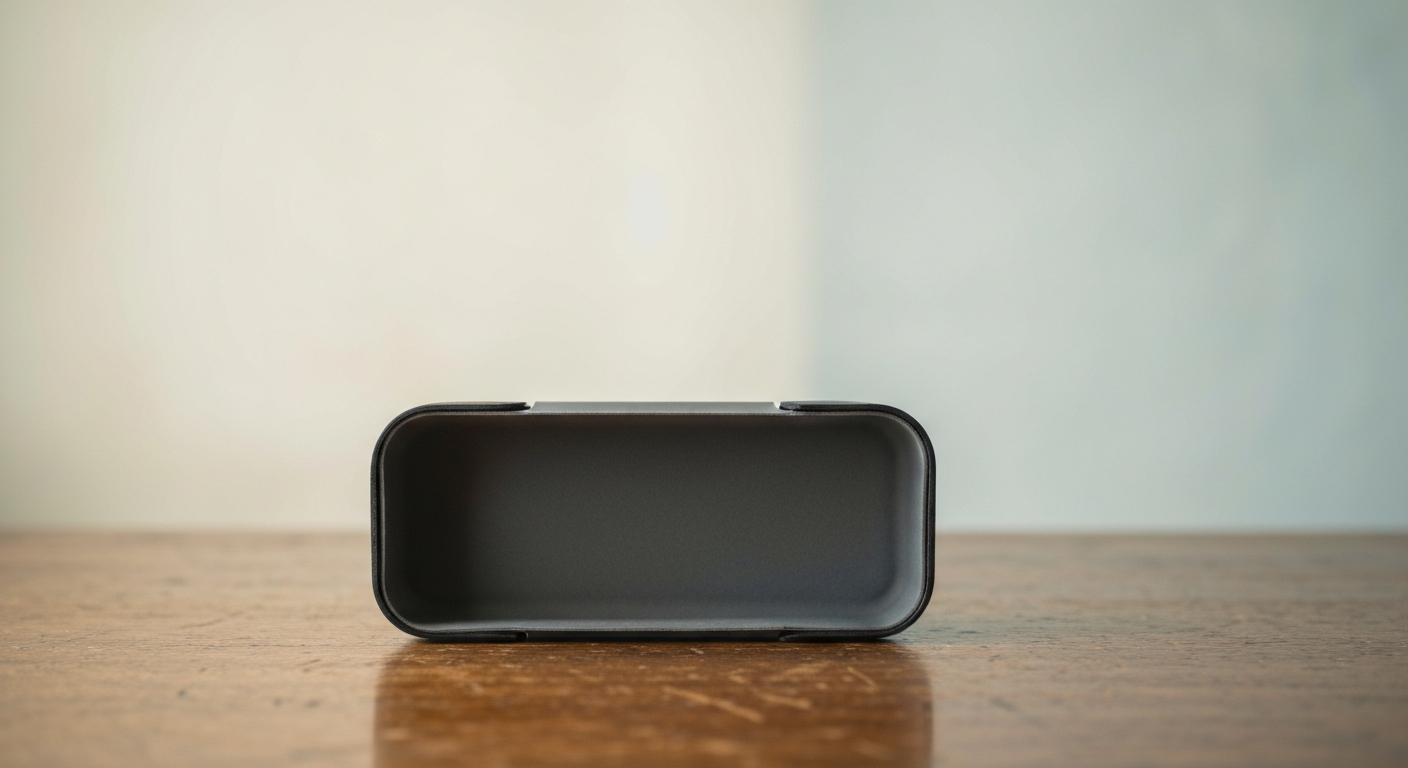
The rigid case the covers come in is not primarily a presentation decision. Its functions during storage are specific. The case keeps the covers in a defined three-dimensional shape, preventing the silicone from deforming under pressure from other objects. Silicone is elastic and recovers from compression. But sustained compression for months — such as from a heavy garment placed on top of a soft container — can permanently deform the shape of a petal-edge cover. Edge deformation affects how the cover conforms to a curved surface: a cover whose petal edges have been compressed flat behaves differently when applied to the body than one that has maintained its designed shape.
The case also controls the storage microenvironment. A closed case limits the exchange between the adhesive surface and the ambient air. It will not prevent humidity penetration in very wet climates, but it significantly slows the airborne particle accumulation that causes surface contamination. With the protective films in place inside the closed case, the adhesive surface has two layers of protection: the film as direct contact barrier, and the case as environmental buffer.
Yellowing: what causes it and whether it matters
Silicone covers can yellow over time, particularly in storage. This happens through UV exposure or through sustained elevated temperature in the presence of air — both of which gradually alter the surface chemistry and create a yellow or amber tint.
Yellowing that is purely cosmetic — where the cover has changed colour but the adhesive surface is otherwise clean and intact — does not affect function. A yellowed cover that has been properly stored with its protective film in a closed case will hold to skin as well as a fresh cover, assuming the adhesive surface is uncontaminated.
Yellowing combined with reduced adhesion, which is the more common complaint after improper storage, indicates that both mechanisms occurred: the surface aged visually and the adhesive layer was contaminated or degraded. The practical test is to clean the cover according to the standard washing protocol, allow it to dry completely, and press it against the inside of the wrist for thirty seconds. If the adhesion feels noticeably weaker than it did when the covers were new, the storage period has reduced the functional adhesive life.
The storage protocol
Clean each cover with the standard wash and allow to air dry completely. Replace each protective film, or cut replacements from silicone-coated baking parchment. Return covers to the original case or a small rigid container. Store in a cool, dark location away from bathrooms, direct sun, and heat sources. For extended storage exceeding three months, a small silica gel packet inside the case controls humidity accumulation.
This takes approximately five minutes at the end of a season. The alternative is covers that were purchased at full price and have lost a meaningful fraction of their effective life before the next occasion they are needed.
The covers are designed for fifteen or more wears under normal conditions. Fifteen wears assumes correct cleaning, correct application, and correct storage between uses. The article on what affects silicone adhesive over time addresses the full lifecycle, including how cleaning frequency and technique interact with storage condition to determine how many uses a pair of covers realistically provides.


