
A silicone cover is a flat disc applied to a curved surface. Below a B cup, the breast curvature is tighter and steeper, requiring the cover edges to travel a longer angular path to reach the skin. Petal-shaped covers crease on this geometry because the narrow petals cannot bend without buckling. Round covers with tapered ultra-thin edges conform without folding.
The short answer: the flower-shaped cover, and a size chosen for your actual curvature, not your cup letter. A cover is a flat disc; the body under it is not. On a fuller bust, the curve is gradual enough that the disc conforms without complaint. Below a B cup, the curve tightens, and a scalloped edge sized for that fuller curve creases at exactly the point a smooth edge would show as a ring. Sized correctly for a smaller bust instead, silicone covers conform edge to edge rather than folding. Everything below is the longer answer: why the petal shape exists at all, and what actually determines whether it lies flat on you.
The cover is flat. The body is not.
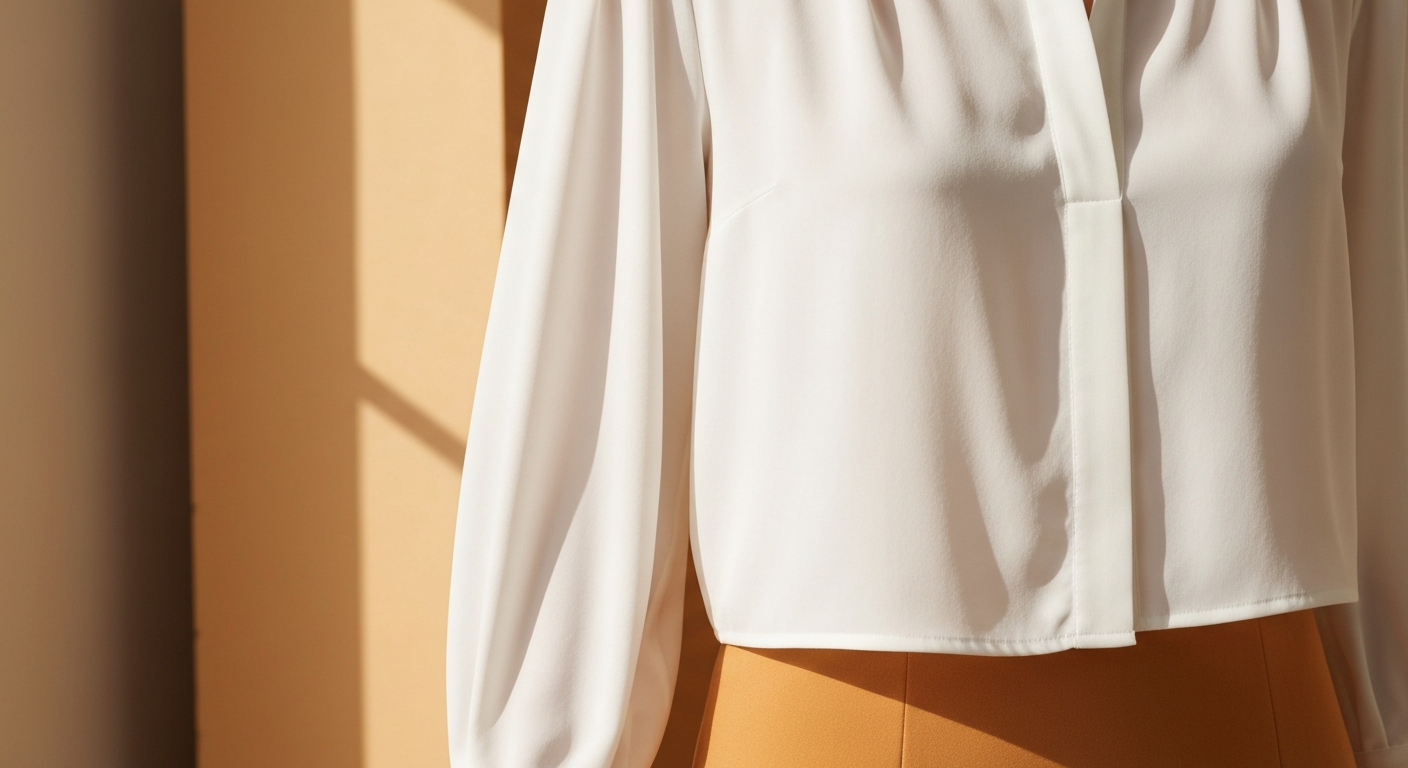
You are in the fitting room, white blouse, thin fabric, the kind that shows everything. You press the covers on at home, feel confident, and then look in a mirror at the venue an hour later and notice a ridge showing through the fabric where the petal edge has lifted and folded. Not dramatic — but visible. And now you are thinking about it for the rest of the evening.
This is not a quality problem. It is a geometry problem. A silicone cover at rest is a flat, flexible disc. The surface it is applied to is curved. The relationship between these two geometries is the whole story of fit for smaller busts.
Why the flower shape creases on smaller busts
On a larger bust, the curvature is gradual. The cover is pressed against a slope that rises slowly from the edge to the centre, and the silicone, which is flexible enough to conform, makes contact across most of its surface without being asked to bend sharply. The cover lies flat because the skin's shape accommodates the cover's shape.
On a smaller bust, the curvature is tighter. Below a B cup, the breast profile rises more steeply from the chest wall. A cover pressed against this surface is being asked to conform to a tighter radius. Whether it can do so without creasing depends on two things: the shape of the cover and how stiff the silicone is at the edges.
The petal or flower-shaped cover has scalloped edges that are narrower than the body of the cover. The intent of this design is to reduce the visible line at the edge by breaking it into a series of curves rather than a single circumference. On a flatter or more gradually curved surface, this works as designed. The petals conform individually, each making contact over its own small area, and the overall edge disappears into the skin.
On a smaller, more steeply curved bust, the same petal design faces a different geometry. As the cover is pressed to the surface, the centre conforms to the peak of the breast. The edges need to travel a longer angular path to reach the skin. They have to bend downward and outward to follow the curve. The narrow petal shapes — which were the design solution to edge visibility — become the problem: they have limited flexibility to bend without buckling. When a petal cannot bend smoothly, it folds. The fold creates a crease. Under a fitted fabric, the crease creates a visible ridge.
Real women notice this exactly. one customer described stickers peeling off and forming creases due to their shape, which became visible under clothing. a lingerie consultant noticed the same thing. a model in Amsterdam, whose experience with professional styling made her particularly attentive to this, found that stylists specifically request round silicone covers with no petal edges for exactly this reason. The flower shape performs differently depending on the geometry it is applied to. On a smaller bust, it is the wrong tool.
Why the round shape behaves differently
A circular cover with a uniform edge has a different relationship to curvature. Without petals, the edge is a continuous ring. When pressed against a curved surface, the edge bends as a single structure, distributing the bending stress evenly around the circumference. There are no narrow points where the structure buckles locally. The edge either lies flat or it lifts uniformly, and uniform lifting is more easily prevented by firm initial pressing and adequate pressing time.
The round shape also has a more consistent thickness all the way to the edge. Petal-shaped covers are thinner at the petal tips than at the centre body of the cover. This means the thinner edge material has even less stiffness to resist buckling. A round cover with uniform edge thickness resists fold formation more consistently across the full perimeter.
For a smaller bust, the practical recommendation from professional styling contexts and from the feedback of real wearers converges on the same answer: the smaller round cover, pressed firmly, held for ten seconds, conforms more reliably and remains flatter under clothing than the flower shape on the same body. This is not a preference. It is the expected outcome of the geometry.
The hold physics of less surface area
There is a second effect of smaller bust geometry that is independent of cover shape: total surface the silicone touches is reduced. The grip of a silicone cover is proportional to the surface the silicone touches between the silicone and the skin. A larger breast provides more skin surface under the cover. The cover is held in place by a larger adhesive footprint.
On a smaller bust, the surface the silicone touches is smaller in absolute terms even if the cover is the same size. This means the hold per unit area must compensate. On a flat surface, adhesion is maximised. On a steeply curved surface, the portions of the cover at the edges are at a steeper angle to the skin surface — and that angle slightly reduces their effective grip. The result is that a smaller bust, despite the common assumption that lighter weight means easier adhesion, can actually experience earlier lifting at the edges than a larger bust in the same conditions.
The compensating actions are the same as for any adhesion improvement: thorough cleaning of the skin surface, firm pressing with a ten-second hold, and allowing the cover to warm to body temperature for a few minutes before dressing, which softens the silicone slightly and improves how it conforms to the skin.
What the limits are
Below a certain bust profile — specifically where the breast projects very little from the chest wall — any adhesive cover is working against a near-flat surface with tight curve transitions at the upper and lower edges of the breast. On this geometry, even the round cover may show slight lifting at the edges by the end of a long day. The cover is not failing. The surface the silicone touches available is genuinely smaller, and what that area can sustain across eight hours of movement and heat is limited.
There is no formulation fix for this. A thinner cover at the edge — which the ultra-thin Korean silicone achieves at under half a millimetre — helps because thinner material conforms more readily to tight curvature. But it does not eliminate the fundamental constraint of geometry on a very small bust.
The honest picture: for most AA to A cup bodies, the smaller round cover works reliably in conditions of moderate movement and normal temperature. In heat, high humidity, or extended wear exceeding six hours, plan to check and re-press at a convenient moment. For very flat profiles with minimal breast projection, covers provide coverage but should not be expected to hold as long as they would on a more projecting bust.
What wearing looks like in practice
one of our regular customers, who carries both the smaller flower-shaped and round covers with her, found the round shape immediately more reliable. The covers she reaches for are the smaller round ones, sized to match her smaller bust projection without excess material at the edges trying to conform to a surface they cannot quite reach.
The question of shape and size is not about matching a number from a measurement chart. It is about matching a geometry. A cover that lies flat, makes full contact at the centre, and has edges that conform smoothly to the skin on either side is the correct cover regardless of what the size label says. Press the cover gently against the skin before removing the backing and observe whether the edges sit naturally against the skin or lift slightly — that tells you more than any chart.
The full range includes both flower and round shapes, in two sizes. For smaller busts, the round shape in the smaller size is where to start. The article on silicone versus fabric covers addresses why the material works through adhesion rather than mechanical coverage, and why that distinction matters for how shape and size interact with the body.
You've read about them. Now see them.

Matte and invisible under sheer.
€29,90€5,98 a pair
Korean silicone · 15+ wears per pair
“I carry them with me everywhere.”
Carol M.

