
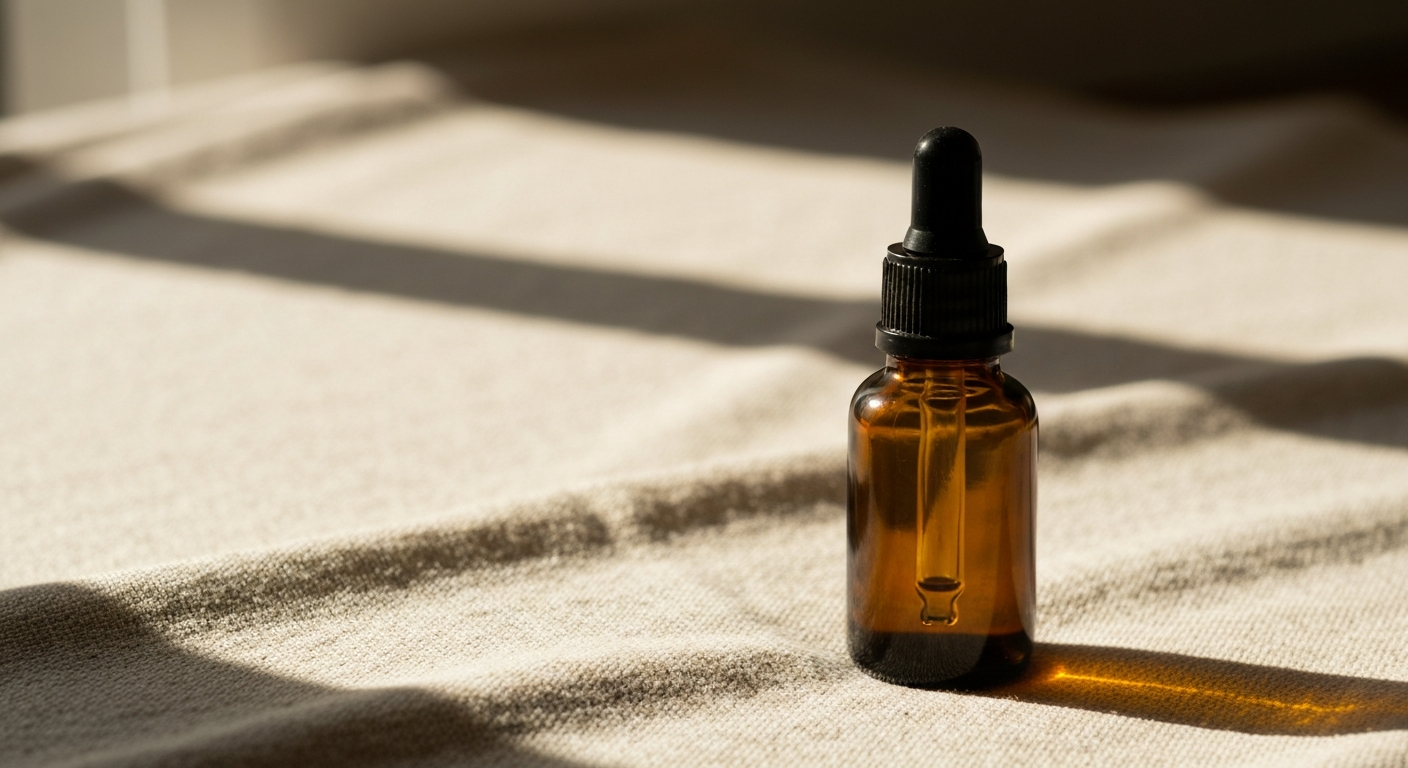
Skin Oils and Hold: Why Clean Means Right Before You Apply
6 min read
The short answer: clean skin right before application, not the night before. Natural oils rebuild within hours of a shower. Yesterday's moisturiser, a trace of sunscreen, a body oil from Sunday, all sit between skin and adhesive and quietly cut the hold. Ultra-thin silicone covers grip a freshly cleaned surface. They do not grip through a residue layer, however invisible it looks. Wash, dry fully, then apply. Everything below is the longer answer: what oils do to adhesive, and the order that gets a full day of hold.
Your skin is never as clean as it looks.
You have just stepped out of the shower. The towel is still warm, the bathroom mirror is starting to clear, and you are reaching for the covers before the morning gets away from you. Your skin looks clean. In the way that matters for adhesion, it almost certainly is not.
Your skin produces its own natural oils continuously — a thin, invisible film that coats the surface and prevents moisture from escaping. It is doing its job. But that film is exactly what sits between the cover and the skin surface and quietly undermines the hold. Add in a moisturiser from yesterday evening, a touch of body oil you applied on Sunday, a sunscreen you put on yesterday but did not wash off well — and what looks like clean skin is carrying a invisible layer of products that no silicone cover can grip through reliably.
Understanding which products cause the most interference changes how you plan a getting-dressed sequence on the morning that matters.
Your skin's natural oils and why they matter
Your skin produces natural oils through tiny glands and secretes them continuously onto the surface. The composition varies by person and by body zone, but the chest and upper body produce enough that by the end of an average workday, an uncleaned surface has accumulated enough oil to visibly reduce adhesive grip strength.
A new layer begins forming within hours of showering. By the time you apply covers the next morning after a previous-evening shower, the surface has already begun to rebuild its oil layer. This is why thorough cleaning immediately before application produces better results than applying over skin cleaned hours earlier — not because your skin is dirty, but because it is doing its job, and that job works against adhesion.
what this means in practice is not complicated: apply on skin that has been cleaned that morning, dried completely, and touched as little as possible since drying. Handling the chest area with bare hands before applying covers deposits fingertip oils onto the freshly cleaned surface and reduces the effective surface the silicone touches.
The ingredient that quietly ruins hold: silicone-based skincare
One of the most widely used ingredients in lightweight moisturisers, primers, and serums is a silicone-based emollient — often listed as dimethicone or cyclopentasiloxane on the ingredients panel. It is included because it spreads easily, helps your skin hold moisture, and leaves skin feeling smooth without a heavy residue. Dermatologists often recommend it for dry skin and barrier support.
The problem for adhesive applications is specific. When a silicone cover presses against skin coated in a silicone-based emollient, the two silicone surfaces interact with each other rather than the cover gripping your skin directly. The result is a slippery interface. The cover may feel secure initially, because the pressing action temporarily pushes some of the product aside. But as the cover warms to body temperature, the product becomes more fluid, and the surface the silicone touches decreases. The cover begins to drift.
Silicone-based emollients do not feel oily, which is why they are so widely used and why their presence is easy to miss. If you wear a primer or serum before getting dressed, check the ingredient list for any of these names: dimethicone, dimethicone copolyol, cyclomethicone, cyclopentasiloxane, cyclohexasiloxane. Any of them applied to the chest area will affect hold if they have not been removed before cover application.
Mineral oil and thick body creams
Mineral oil — also listed as paraffinum liquidum in ingredient lists — is the other major hold-blocker in common skincare. It is used in balms, thick creams, and petroleum jelly formulations. Unlike silicone-based emollients, mineral oil does not absorb into the skin. It forms a physical film on the surface. That film does not dissipate over time.
If a mineral-oil-containing body cream was applied to the chest the previous evening, it may still be present on the skin surface the following morning unless specifically removed by washing with soap. Thick body butters often contain both mineral oil and other heavy ingredients. Applied the night before, they can significantly reduce adhesive performance the following day if the morning shower does not include thorough washing of the application area.
Sunscreen and the morning sequencing problem
Sunscreen applied to the chest, décolletage, and upper body before dressing will significantly compromise hold if applied to the same area where covers will sit. Physical sunscreens — those using zinc oxide or titanium dioxide — typically include silicone-based or wax-based carriers to make them spreadable. Chemical sunscreens have lighter carriers but can still contain silicone-based emollients. Even a light sunscreen applied to the chest and allowed to absorb for twenty minutes creates a surface film that reduces grip strength.
The sequencing approach for a summer morning: apply sunscreen to the face, neck, and exposed areas before the covers are placed, and carefully avoid the specific skin area where the covers will sit. For garments with a low neckline where both sun-exposed skin and cover placement overlap, apply the covers first on clean dry skin, then apply sunscreen around the cover area after — with a careful finger, avoiding the adhesive edges. The covers go on before the sunscreen, not after.
Body oil: the fastest way to lose hold entirely
Body oils — whether jojoba, argan, or any fragrance-based body elixir — are the most immediate adhesion problem in skincare. They are made up of oils similar in character to your skin's natural oils. Applied to skin, they penetrate and simultaneously leave a surface film. They are designed to remain on the skin. They are effective at doing exactly that.
Apply body oil to the area where the covers will sit, and you will find hold reduced to near-zero within the first two hours of wear. The issue is not the amount of oil applied but its very presence. A non-absorbed oil on skin has nowhere to go. It sits at the interface and prevents the silicone from making contact.
Body oil applied the night before has similar but reduced effects. The morning shower with a standard body wash will remove most surface oil but not all if the application was generous. For confident hold after a body oil routine, washing the cover placement area specifically with a mild soap, rinsing thoroughly, and drying completely before applying covers is necessary.
The correct sequence
what this means in practice emerges from all of the above. Shower with a mild soap, not just water. Dry the skin completely, including the cover placement area, with a clean dry towel. Apply nothing — no moisturiser, primer, sunscreen, or body product — to the cover placement area. Apply the covers to completely dry, product-free skin. Then apply body moisturiser, sunscreen, or other products to the areas outside the cover zone.
The sequence matters more than the products. The same moisturiser that undermines hold when applied before covers is irrelevant to hold when applied after. The timing of what is on your skin surface is the thing you can control — and it is entirely within the control of the person getting dressed.
The covers perform to their how they were designed to work when the skin preparation is correct. The article on what affects silicone adhesive performance addresses the full range of variables, including what happens over multiple wears when cleaning is or is not done correctly.
The covers. Designed to disappear under everything.

Matte and invisible under sheer.
€29,90€5,98 a pair
Korean silicone · 15+ wears per pair
“I carry them with me everywhere.”
Carol M.

