
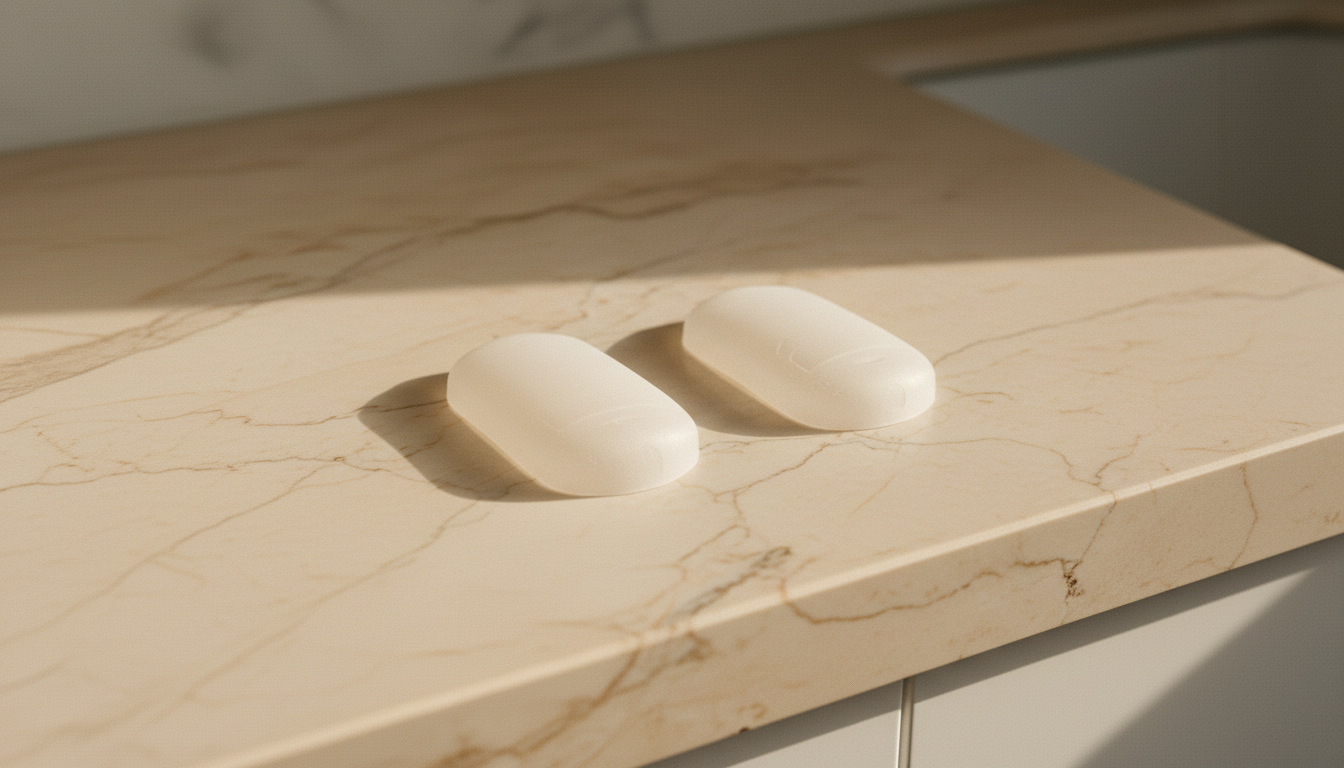
The short answer: yes, many times over. A single pair of silicone covers is rated for 15 or more wears, not one. Wash it after the event. Let it dry. Use it again at the next one. A disposable pair does the opposite: worn once, discarded, replaced before the next occasion arrives. Over a year of events, the reusable pair is bought once. The disposable pair is bought every few weeks, indefinitely. Nothing in the adhesive changes between wear one and wear fifteen. Everything below is the longer answer: what one-time use actually costs, and why the maths never closes.
A wedding dress is worn once. The shoes are worn once. The dress is cleaned and stored; the shoes go in a box. Everything else a woman wears on that day, including the invisible layer that holds the dress together from underneath, is usually worn once too. Packaged for a single use, opened on the morning of, gone by the end of the evening. That is how the category works.
We decided not to make that version.
The maths of single-use
A disposable adhesive cover costs about three euros a pair. A woman who dresses for twenty events a year spends sixty euros to be covered. The same woman can buy a pair made to be worn fifteen times for twenty-five euros, and cover the same year on one purchase. The disposable version is not cheaper. It is more expensive, forever, because the use cycle never ends.
The second cost is harder to ignore once you see it. Silicone does not break down in the earth the way cotton or wool does. A disposable cover, worn for six hours, sits in a landfill still intact five centuries from now. Five centuries of afterlife for a product that existed for an afternoon. For a category that holds a few hours of your life and then ends, the arithmetic never balances.
The razor model
Cheap handle, endless blades. The business has been wealthy for a century because the customer comes back every week. Every adhesive lingerie brand that sells disposables is running the same playbook. The product is the blade. You buy, you use, you throw away, you buy again, and the first purchase never pays back.
A reusable cover flips it. At fifteen wears per pair, each wear costs about a euro. At two years of consistent use, it falls closer to thirty cents. That is a number that compounds in a way the disposable version never can, because disposables have nothing to compound on. Every wear costs what it cost the first time. Forever.
Why the material has to match the intention
Most disposable adhesive covers are made from a cheap version of silicone that cannot be safely washed and worn again. They are fine once. By the third or fourth attempt, the wearer can feel the difference. The cheap version was never designed to hold together across cycles.
The stable version is medical-grade silicone. The same specification used in surgical equipment and the kind of skin-contact products tested the way implants are tested. It is inert against skin, it holds its properties through repeated use, and it can be washed fifteen times without losing the grip that makes it work in the first place. There is no shortcut to this. If a cover is honestly made to be reused, it has to be made of this material.
Ours is. Made in Korea, under the standards Korean OEM manufacturing uses for skincare, surgical-grade products, and the kind of quiet precision the country is known for. It is not a premium tier within the line. It is the baseline. Any cover claiming fifteen wears at a lower material spec is either misleading about the wear count or quietly trading skin compatibility against durability. There is no middle ground.
The argument nobody makes
The money case is real. The environmental case is real. Neither is the reason we made it reusable.
The reason was this: a wedding dress is worn once. The day it is worn is not a day for first attempts. The woman who arrives at the morning of her wedding, opens a package, and learns for the first time how a new product behaves on her specific skin, under her specific dress, is taking a chance she did not need to take.
A reusable cover is a cover that can be rehearsed with. That is the difference between a dress rehearsal and a performance. The bride who has worn her covers three or four times before the wedding knows exactly how long they hold, how they feel under the fabric, how her skin reacts, how they release at the end of the night. She is not trusting a product she has never used before on the morning that matters most. She is wearing something she has already met.
Disposables cannot be rehearsed with. Using one is ending it. There is no way to test tomorrow what you will wear on the morning of, because tomorrow's pair does not exist anymore.
That is the real reason Skindelle built the product to be worn fifteen times. Not to save sixty euros a year, although it saves sixty euros a year. Not to keep a piece of silicone out of a landfill, although it keeps the silicone out of the landfill. But to make sure that on the one day that cannot be rehearsed, the thing closest to her skin is the one thing she has already rehearsed with.
Care, in one paragraph
Thirty-second wash with mild soap. Full air-dry. Return to the original film for storage. The release liner is the storage case. The product is ready for the next use when it is dry and clean. The full care guide covers the details, but nothing in the routine is harder than washing a wine glass.
The choice
A disposable cover solves one problem: the user opens it, applies it, never thinks about it again. That is a real convenience. It is also the only problem that version solves. The cost keeps accruing. The waste keeps accumulating. The product is met for the first time on the morning of the most important event it is there to support.
The version that can be worn fifteen times, washed in the sink, dried overnight, and worn at the wedding after four trial runs, solves more problems than that. The choice was never close. For the covers themselves, made in Korea, built to be rehearsed with, the rest of the journal shows what they go under and how they hold.
The covers. Designed to disappear under everything.

Matte and invisible under sheer.
€29,90€5,98 a pair
Korean silicone · 15+ wears per pair
“I carry them with me everywhere.”
Carol M.

