
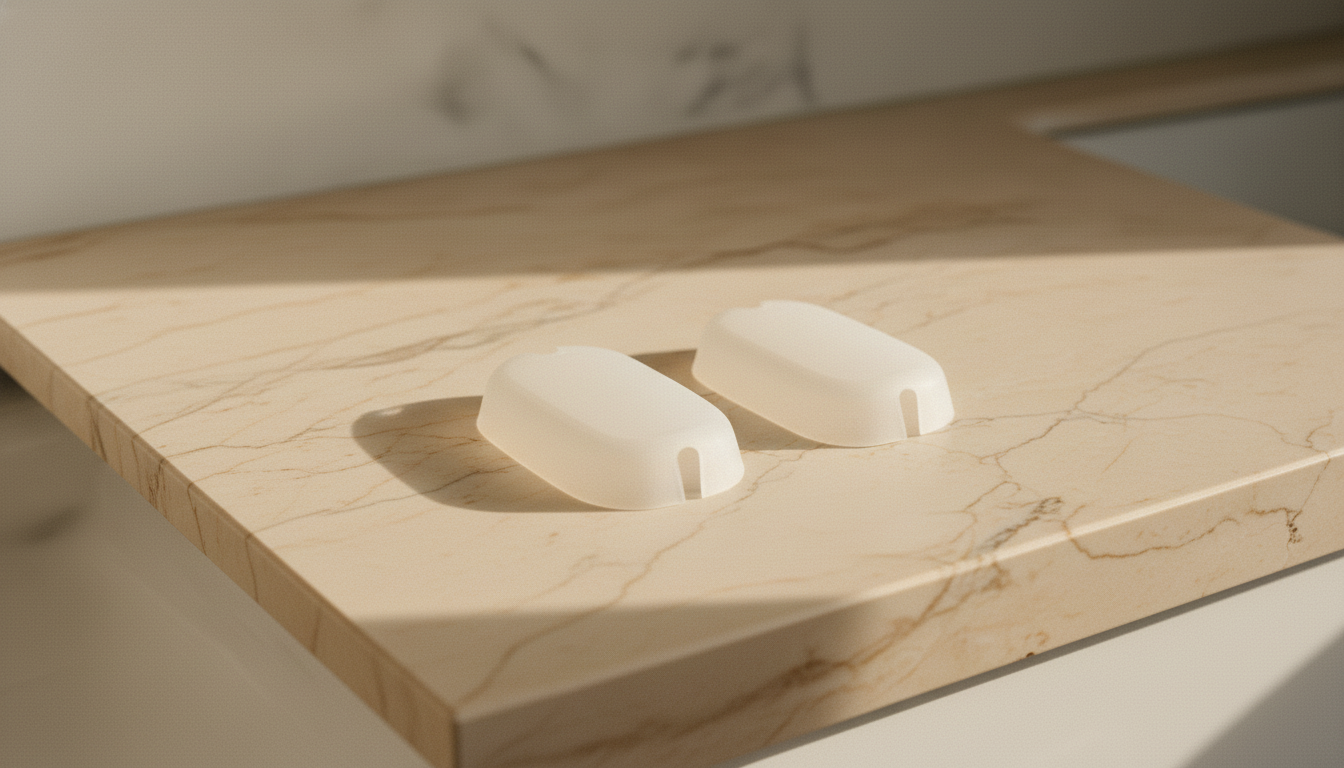
Cheap adhesive covers fail at the edge within ninety minutes because of how the silicone was made and what was used to stick it to your skin. Both decisions are invisible in the product photo. Here is how to tell the difference before the evening arrives.
The short answer: medical-grade silicone, made to the same standard as surgical skin-contact products. Cheap covers are manufactured quickly, and the process leaves trace residues inside the finished material that are harmless once but accumulate across repeated wear. What shows up looks like an allergy. It is not one; it is residue doing what residue does. Made to a cleaner standard instead, silicone covers leave nothing behind, which is the entire difference between a pair that is fine for one night and a pair built for fifteen or more. Everything below is the longer answer: what actually determines whether a cover holds, and the two things a product photo can never show you.
The failure is always at the same moment. Ninety minutes into the evening, the adhesive releases from the edge, and the whole system shifts. By the time it happens you are at a restaurant, or on a dance floor, or seated across from someone in a room where adjusting the front of your dress is not an option. The failure is not bad luck. It is the predictable consequence of a material decision made weeks earlier in a factory, selected entirely on cost.
There are two things that determine whether an adhesive cover holds all evening. The first is the silicone itself. The second is the layer that makes it stick to your skin. Neither is visible in the product photo.
Why the silicone matters
Not all silicone is the same. The version used in cheap covers is made quickly, at lower cost, and retains trace residues from the manufacturing process inside the finished material. Those residues are harmless in a single wear. Across twelve or fifteen wears against the same skin surface, they accumulate. The result, for wearers who use the product repeatedly, is skin irritation that develops gradually and looks like an allergy. It is not an allergy. It is the material doing what it was always going to do.
The version used in medical-grade covers is made to a higher standard: a cleaner process that produces no residues and leaves nothing inside the finished material. It is the same process used for surgical skin-contact products. It costs more at every stage of manufacturing, which is why it is not the default for cheap covers, and why it is the only version worth wearing against your skin for a full evening.
The adhesive is a separate problem
The layer that sticks the cover to your skin is a separate compound from the silicone disc itself. In most cheap covers, that layer is an adhesive similar to what is used in stickers and packaging tape: strong initial bond, inexpensive to produce. The problem is that this type of adhesive increases in strength with body heat. After several hours of wear, the bond is stronger than it was at application. When you remove the cover, the adhesive does not release cleanly. It takes the top layer of your skin with it.
The skin around the nipple is thin and sensitive. That kind of removal, repeated over weeks, produces the redness and soreness that wearers attribute to sensitivity. It is not sensitivity. It is damage from the wrong adhesive.
Medical-grade covers use a different adhesive entirely: one that conforms to the surface of the skin without forming a deepening chemical bond. It does not get stronger with heat. It does not increase in strength over the course of an evening. At removal, it lifts cleanly because there is no chemical engagement to overcome. This is the same adhesive chemistry used in wearable medical devices worn continuously for days. The performance requirement is the same: hold reliably, release without damage.
The edge
The third failure mode is visible in the dress rather than felt on the skin. An adhesive cover must taper from its centre thickness to almost nothing at the perimeter. Under fabric, any detectable edge creates a visible ridge. Under silk or any draped fabric, even a ridge of half a millimetre shows through.
Manufacturing a properly tapered edge requires precision tooling that adds cost. The shortcut is a die-cut edge: fast, consistent, and abrupt. A die-cut edge catches the light under any draped fabric. The Korean manufacturing infrastructure that makes the tapered edge possible developed over decades of medical device production. It is not available at the price point a cheap cover needs to hit.
What to look for
When evaluating an adhesive cover, three things carry meaningful information. The first is whether the silicone is medical-grade, which means tested for long skin contact, not just labelled as such. The second is whether the adhesive is the kind that releases cleanly, which the brand should be able to describe in plain terms. The third is the edge: a measurement or a clear description of how the taper is achieved, not just the word ultra-thin as decoration.
The difference in price between a cheap cover and a correctly made one is not large relative to the total cost of the evening it is supporting. The failure, when it happens, is total. It does not degrade gradually and give time to adjust. It happens at the edge, at warmth, at the moment when adjustment is least possible. The decision about which product to buy is made weeks before the evening arrives.
A properly made silicone adhesive cover, cared for correctly, holds its adhesion for fifteen or more wears. The cost per wear over that lifespan is a fraction of the purchase price. At three or four wears per year, the correctly specified product is less expensive over twelve months than its cheaper alternative, and holds every single time.
You've read about them. Now see them.

Matte and invisible under sheer.
€29,90€5,98 a pair
Korean silicone · 15+ wears per pair
“I carry them with me everywhere.”
Carol M.

